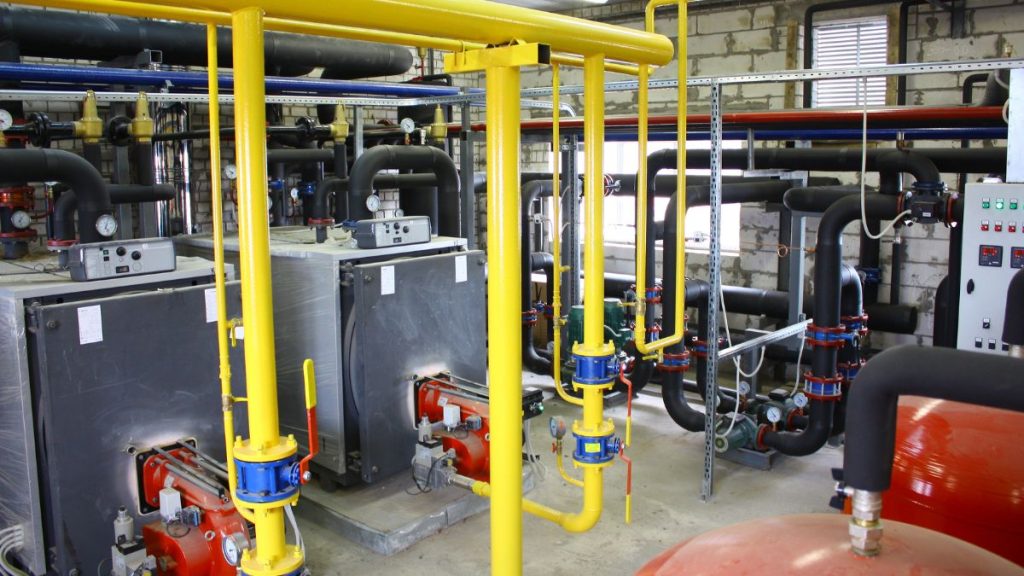
Boiler performance can quickly decline when hardness minerals are allowed to enter the system. Industries that fail to reduce boiler water hardness often face scaling, energy loss, higher fuel consumption, and unexpected maintenance shutdowns. Even a small amount of calcium and magnesium in boiler feed water can create deposits that reduce heat transfer efficiency and shorten equipment lifespan.
To maintain reliable boiler operation, industries need proper water treatment strategies that specifically target hardness removal before water enters the boiler system.
What Is Boiler Water Hardness?
Boiler water hardness refers to the presence of dissolved minerals, primarily calcium and magnesium, in feed water. These minerals naturally exist in many raw water sources, such as groundwater, surface water, and municipal supply water.
When hard water is heated inside the boiler, the minerals precipitate and form scale deposits on heat transfer surfaces. Over time, this buildup creates operational problems that affect efficiency, steam quality, and equipment reliability.
The higher the hardness level, the greater the risk of scale formation.
What Happens If Boiler Water Hardness Is Too High?
Excessive hardness in boiler feed water can cause serious operational and financial consequences for industrial facilities.
1. Scale Formation Inside the Boiler
Calcium and magnesium deposits form hard scale layers on boiler tubes and heat exchangers. Even thin scale buildup can significantly reduce heat transfer efficiency.
As a result, the boiler requires more fuel to achieve the same steam output.
2. Increased Energy Consumption
Scale acts as an insulating barrier between heat and water. This forces the boiler to work harder, increasing fuel usage and operational costs.
In many industrial operations, poor hardness control directly contributes to energy inefficiency.
3. Overheating and Tube Failure
Heavy scale buildup can create localized overheating on boiler tubes. Over time, this may lead to metal fatigue, tube cracking, or even unexpected boiler shutdowns.
Unplanned downtime often results in costly repairs and production interruptions.
4. Higher Blowdown Frequency
Boilers with excessive dissolved solids and hardness contamination typically require more frequent blowdown to maintain water quality.
Excessive blowdown increases water loss, chemical consumption, and energy waste.
5. Reduced Boiler Lifespan
Continuous exposure to scaling conditions accelerates equipment deterioration and reduces overall boiler lifespan.
Proper feed water treatment is significantly more cost-effective than repeated maintenance or equipment replacement.
Read Also: Corrosion in Boiler: Causes, Operational Impact, and How Industries Can Reduce the Risk
How to Reduce Hardness in Boiler Feed Water
Industries can reduce boiler water hardness effectively by combining proper pretreatment systems, monitoring, and chemical control.
1. Water Softening Systems
Water softeners are one of the most common solutions for hardness removal in boiler feed water.
Softening systems use ion exchange resin to replace calcium and magnesium ions with sodium ions before water enters the boiler.
This method is widely used for low to medium-pressure boiler systems.
2. Reverse Osmosis (RO) Systems
For industries requiring higher water quality, Reverse Osmosis systems can significantly reduce dissolved minerals, including hardness ions.
RO systems help minimize scaling risk while improving overall boiler water stability.
3. Chemical Treatment Programs
Internal boiler treatment chemicals are often used to control residual hardness and prevent scale formation.
Common treatment programs may include:
- Phosphate treatment
- Polymer dispersants
- Oxygen scavengers
- Alkalinity control chemicals
The correct chemical dosage depends on feed water quality and boiler operating conditions.
Read Also: Boiler Chemical: Essential Solutions for Efficient Boiler Water Treatment
4. Proper Feed Water Monitoring
Routine monitoring is critical to maintain stable boiler operation.
Important parameters include:
- Total hardness
- Conductivity
- pH
- Silica
- Total dissolved solids (TDS)
Consistent monitoring allows operators to identify problems early before severe scaling occurs.
5. Regular Maintenance and Cleaning
Periodic inspection and cleaning help remove deposits before they become severe.
Preventive maintenance programs are essential for maintaining long-term boiler efficiency and reliability.
Maintaining Stable Boiler Performance Through Proper Water Treatment
Reducing hardness is not only about preventing scale. It is also about maintaining stable steam production, reducing operational costs, and extending equipment lifespan.
Every boiler system has different feed water characteristics, operating pressures, and treatment requirements. Because of this, water treatment programs should be customized based on actual operating conditions rather than using a one-size-fits-all approach.
Supporting Reliable Boiler Water Quality Management
Effective boiler water treatment requires more than just chemicals. It also involves proper system evaluation, feed water analysis, monitoring programs, and operational support.
As a company with decades of experience in industrial water treatment, Lautan Air Indonesia provides integrated solutions for boiler systems, including:
- Boiler water treatment chemicals
- Water softening systems
- Reverse Osmosis systems
- Feed water analysis and monitoring
- Technical consultation and operational support
- Preventive maintenance programs
With the right treatment strategy, industries can reduce scaling risk, improve energy efficiency, and maintain more reliable boiler performance.
If your facility is experiencing scaling, high fuel consumption, or unstable boiler performance, the right water treatment approach can help improve operational reliability and long-term efficiency.
Contact Lautan Air Indonesia to discuss the right boiler water treatment solution for your industrial operation.