
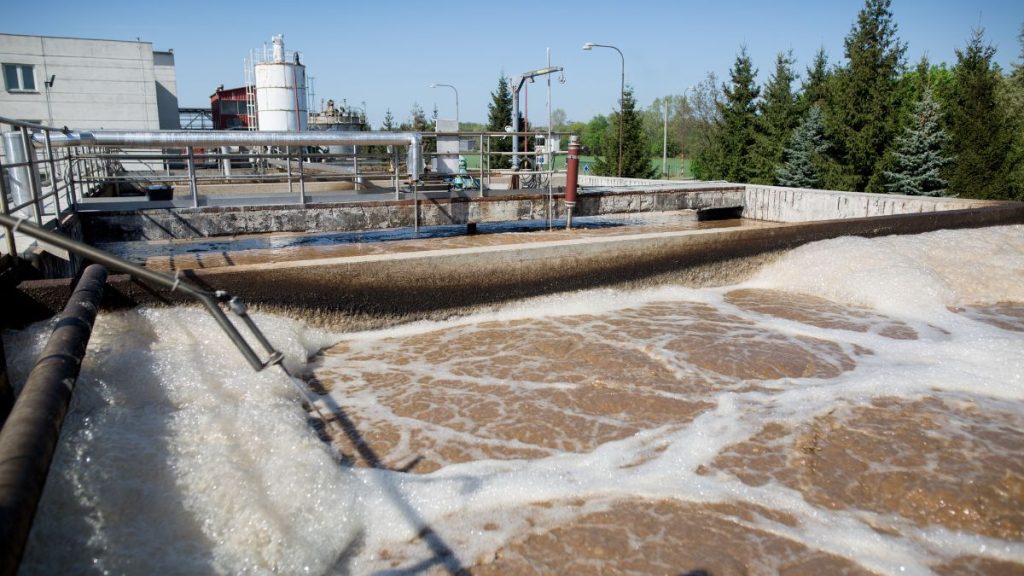
A moving bed biofilm reactor (MBBR) is one of the most reliable solutions for improving biological wastewater treatment efficiency without requiring major system expansion. If your plant is facing inconsistent effluent quality, high organic loads, or limited space for upgrades, implementing a moving bed biofilm reactor can directly address these challenges with a compact and scalable approach.
How a Moving Bed Biofilm Reactor Works
At its core, a moving bed biofilm reactor uses specially designed plastic carriers that move freely within a reactor tank. These carriers provide a large surface area where microorganisms attach and grow, forming a biofilm.
Here is how the process operates in real conditions:
- Wastewater enters the reactor containing organic pollutants.
- Aeration or mechanical mixing keeps the carriers in constant motion.
- Microorganisms on the carrier surface break down organic matter and pollutants.
- The treated water flows out, while the biofilm remains attached to the carriers.
Unlike conventional activated sludge systems, the moving bed biofilm reactor does not rely solely on suspended biomass. This makes the process more stable and less sensitive to load fluctuations.
Purpose of a Moving Bed Biofilm Reactor
The main purpose of a moving bed biofilm reactor is to enhance biological treatment capacity while maintaining operational simplicity. It is widely used in both municipal and industrial wastewater treatment for several key reasons:
1. Increase Treatment Efficiency Without Expanding Footprint
MBBR systems maximize the use of existing tank volume by introducing high-density biofilm carriers.
2. Handle Load Fluctuations
The attached growth system provides resilience against shock loads and variable influent conditions.
3. Improve Effluent Quality
Effective removal of BOD, COD, and ammonia makes it suitable for meeting stricter discharge standards.
4. Reduce Sludge Production
Compared to traditional systems, sludge generation is typically lower, reducing handling and disposal costs.
Read Also: Sludge Blanket: How to Control It for Stable and Efficient Water Treatment
Common Problems in Moving Bed Biofilm Reactor Systems
While a moving bed biofilm reactor is known for its robustness, operational issues can still arise if not properly managed.
1. Uneven Biofilm Growth
Poor aeration or mixing can lead to inconsistent biofilm distribution, reducing treatment efficiency.
2. Carrier Loss or Damage
Improper screening systems may allow carriers to escape, leading to performance decline and replacement costs.
3. Oxygen Transfer Limitations
Insufficient aeration affects microbial activity, especially in high-load conditions.
4. Excessive Biofilm Thickness
If not controlled, biofilm can become too thick, causing sloughing and unstable effluent quality.
5. Fouling and Blockages
Accumulation of debris or inorganic materials can interfere with carrier movement and reactor hydraulics.
How to Optimize Moving Bed Biofilm Reactor Performance
To ensure consistent results, operators should focus on:
- Maintaining proper aeration intensity for effective mixing and oxygen supply
- Monitoring carrier fill fraction and condition
- Regular inspection of screens and retention systems
- Controlling influent load to avoid sudden shocks
- Implementing routine performance evaluation and troubleshooting
A well-managed moving bed biofilm reactor can operate efficiently for years with minimal downtime.
Read Also: Scaling and Deposit Control: Why It Matters for Reliable Water Treatment Operations
Supporting Reliable MBBR Operation and Performance
Optimizing a moving bed biofilm reactor requires more than just equipment. It requires the right combination of system design, operational expertise, and ongoing support.
Lautan Air Indonesia (LAI) provides integrated solutions to help ensure your MBBR system performs at its best:
- Process evaluation and optimization to identify performance gaps and improve efficiency
- High-quality water treatment chemicals to support biological stability and system balance
- Operation and maintenance services to maintain consistent reactor performance
- Equipment and system upgrades tailored to your existing plant conditions
- Monitoring and control solutions to improve visibility and decision-making
With extensive experience in water and wastewater treatment, LAI works closely with clients to deliver practical, results-driven solutions that align with operational needs.
If your wastewater treatment system is struggling with performance, capacity, or consistency, a moving bed biofilm reactor could be the solution, but only when properly designed and managed.
Contact LAI today to discuss how we can help optimize your system, improve efficiency, and ensure compliance with your treatment goals.