
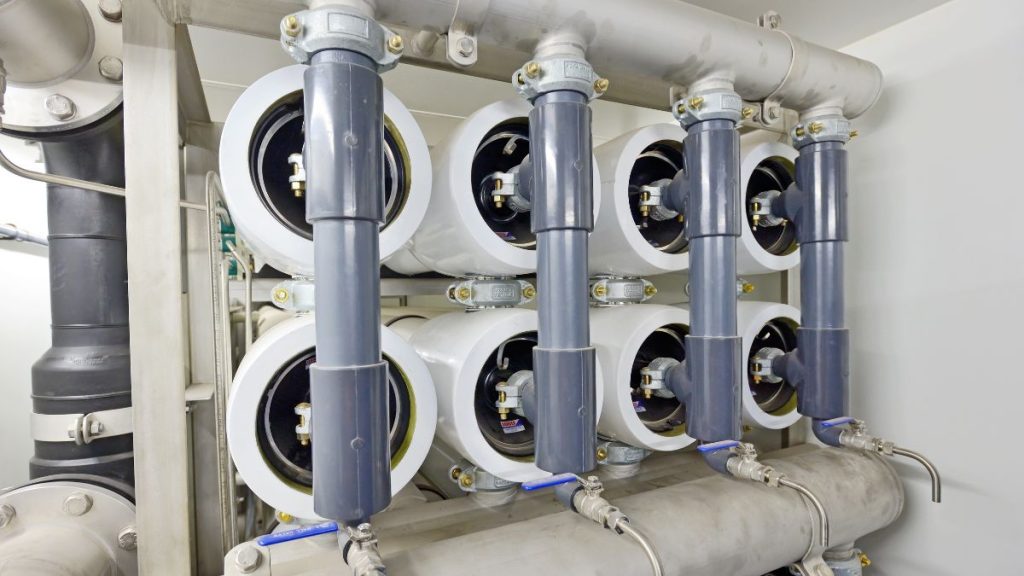
Differential pressure in an RO system is one of the most important operating parameters to monitor because it provides an early indication of membrane fouling, scaling, or flow restrictions. While permeate flow and water quality often receive the most attention, differential pressure frequently reveals performance issues before they become severe enough to affect production.
Knowing what constitutes a normal differential pressure, understanding why it changes, and responding before it reaches critical levels can significantly extend membrane life and reduce operating costs.
What Is Differential Pressure in an RO System?
Differential pressure (DP), sometimes called pressure drop, is the difference between the feed pressure entering an RO membrane vessel and the concentrate pressure leaving it.
Formula:
Differential Pressure = Feed Pressure − Concentrate Pressure
For example:
- Feed Pressure: 15 bar
- Concentrate Pressure: 13.8 bar
Differential Pressure = 1.2 bar
This pressure loss occurs naturally as water flows through membrane feed channels. However, excessive pressure loss usually indicates that something is restricting water flow inside the membrane element or pressure vessel.
Why Differential Pressure Matters
Monitoring differential pressure helps operators identify developing problems before they lead to production losses.
An increasing differential pressure can indicate:
- Membrane fouling
- Scale formation
- Biofilm growth
- Plugged feed spacers
- Obstructed piping or valves
If left untreated, these issues can:
- Increase energy consumption
- Reduce membrane lifespan
- Lower system recovery
- Increase cleaning frequency
- Cause uneven flow distribution across membrane elements
Because differential pressure often changes before permeate flow declines significantly, it serves as an effective early warning indicator.
Read Also: How to Interpret RO Performance Data Before System Failure Occurs
What Is Normal Differential Pressure in an RO System?
There is no single universal value because normal differential pressure in an RO system depends on factors such as:
- Membrane type
- Number of elements per pressure vessel
- Feed water quality
- Operating flow rate
- System design
In many industrial RO systems, differential pressure across a single pressure vessel is commonly around 0.5 to 1.5 bar (7 to 22 psi) during normal operation. Larger systems may have different baseline values established during commissioning.
Instead of comparing your system to a generic industry number, the most reliable approach is to compare current readings with the system’s clean baseline.
A gradual increase over time usually indicates that fouling or scaling is developing.
Many membrane manufacturers recommend investigating the system when differential pressure increases by approximately 15% from the clean operating condition, although the exact limit should always follow the membrane supplier’s operating guidelines.
Why Standardized Performance Data Matters
Raw differential pressure readings do not always provide a complete picture of membrane condition.
Changes in feed water temperature, operating flow, recovery rate, and feed pressure can naturally influence pressure readings, even when the membranes remain clean. As a result, comparing today’s operating data directly with historical values may lead to incorrect conclusions.
To improve performance evaluation, ASTM D4516, Standard Practice for Standardizing Reverse Osmosis Performance Data, describes methods for standardizing RO operating data so performance can be evaluated under consistent operating conditions. By comparing standardized performance trends rather than raw operating data alone, operators can more accurately distinguish normal process variation from developing membrane fouling or scaling.
Using standardized operating data alongside differential pressure trending provides a more reliable basis for maintenance decisions and helps avoid unnecessary membrane cleaning while ensuring genuine performance issues are identified early.
Read Also: Type of Membrane Fouling and How to Prevent It in Water Treatment Systems
What Causes Differential Pressure in an RO System to Increase?
A rising differential pressure in an RO system usually means resistance to feed water flow has increased somewhere inside the membrane system.
The most common causes include:
1. Particulate Fouling
Suspended solids can accumulate inside membrane feed channels.
Common sources include:
- Silt
- Clay
- Iron particles
- Corrosion products
- Poor pretreatment performance
This type of fouling often develops gradually and causes a steady increase in differential pressure.
2. Scale Formation
Minerals dissolved in feed water can precipitate on membrane surfaces when concentration exceeds their solubility limits.
Common scales include:
- Calcium carbonate
- Calcium sulfate
- Barium sulfate
- Silica
Scaling restricts flow passages and increases hydraulic resistance.
3. Biological Fouling
Microorganisms can form biofilms inside membrane feed channels.
Biofouling typically causes:
- Rapid differential pressure increase
- Higher cleaning frequency
- Reduced system efficiency
- Persistent performance decline
Systems using surface water are generally more susceptible to biological fouling if pretreatment and disinfection are not properly managed.
4. Organic Fouling
Natural organic matter, oils, and industrial contaminants may accumulate on membrane surfaces.
This is common in applications where feed water contains:
- Humic substances
- Industrial wastewater contaminants
- Oils or greases
Organic fouling often requires specialized cleaning chemicals.
5. Mechanical Flow Restrictions
Not every increase in differential pressure originates from the membranes.
Other possible causes include:
- Blocked cartridge filters
- Partially closed valves
- Damaged piping
- Plugged feed distributors
- Instrumentation errors
These issues should always be ruled out before assuming membrane fouling.
How to Monitor Differential Pressure Effectively
Effective monitoring involves more than recording daily pressure readings.
Best practices include:
- Establish a clean baseline immediately after commissioning or membrane cleaning.
- Record feed, concentrate, and permeate pressures consistently.
- Trend differential pressure over time rather than relying on isolated measurements.
- Track normalized differential pressure whenever possible.
- Investigate sudden changes promptly.
- Schedule cleaning before excessive fouling becomes permanent.
Consistent monitoring enables maintenance teams to act proactively instead of waiting for production losses.
What to Do When Differential Pressure Increases
When differential pressure continues to rise, a systematic approach is recommended.
Start by verifying that pressure transmitters and gauges are functioning correctly. Next, inspect pretreatment equipment such as multimedia filters and cartridge filters to ensure they are operating effectively.
If pretreatment is functioning normally, review historical operating trends to determine whether the increase is gradual or sudden. Trending normalized differential pressure provides a clearer indication of whether membrane fouling is actually developing.
When fouling is confirmed, performing a Clean-in-Place (CIP) before deposits become irreversible can help restore membrane performance and reduce long-term operating costs.
Keep Your RO System Performing with Better Monitoring and Maintenance
Maintaining a stable differential pressure in an RO system is not only about protecting membranes. It is also about maintaining production reliability, reducing downtime, and optimizing operating costs.
At Lautan Air Indonesia (LAI), we help industrial facilities move beyond reactive troubleshooting by combining routine monitoring with practical operational support. Our services include membrane performance evaluation, laboratory water analysis, pretreatment optimization, chemical programs, membrane cleaning recommendations, and comprehensive operation and maintenance support.
Rather than applying the same solution to every system, our engineers evaluate your operating conditions and water quality to identify the most effective corrective actions for your application.
Conclusion
Differential pressure is one of the earliest indicators of membrane health in any reverse osmosis system. Understanding what is normal, recognizing the factors that influence pressure readings, and monitoring normalized differential pressure can help operators detect problems before they become costly failures.
With proper monitoring, effective pretreatment, and timely maintenance, facilities can improve membrane performance, reduce cleaning frequency, and extend equipment life.
Need Support Optimizing Your RO System?
Whether you’re investigating rising differential pressure, recurring membrane fouling, or declining system performance, Lautan Air Indonesia can help evaluate your RO operation and recommend practical solutions based on your water quality and process conditions.
Contact our water treatment specialists today to discuss your system and discover how proactive monitoring and optimized maintenance can improve long-term RO performance.
Reference
ASTM International. ASTM D4516-19a: Standard Practice for Standardizing Reverse Osmosis Performance Data. https://store.astm.org/standards/d4516