
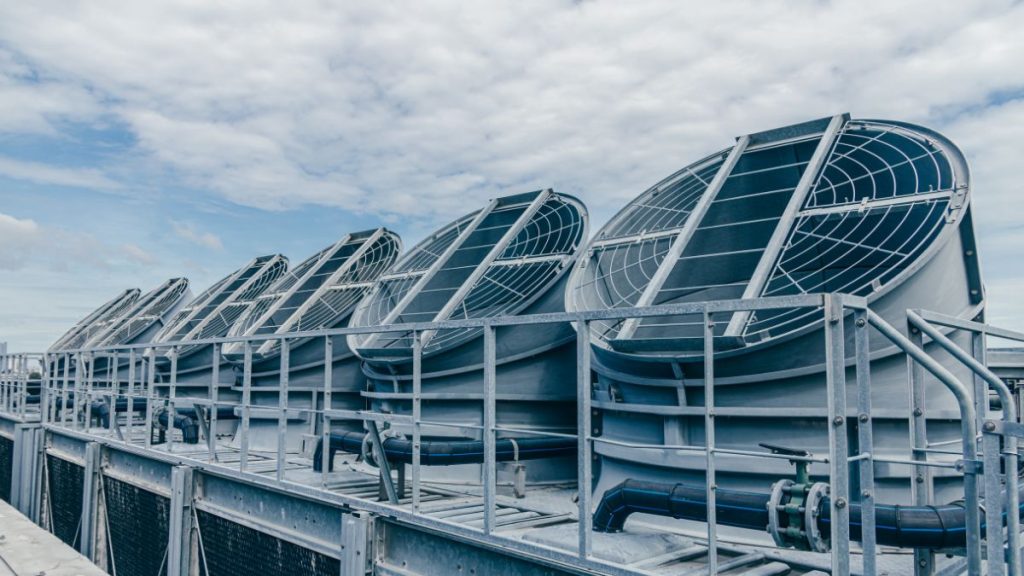
Cooling tower performance depends heavily on water quality. Without the right cooling tower chemical program, systems can quickly experience scale formation, corrosion, microbiological growth, and reduced heat transfer efficiency. These issues not only increase operational costs but can also shorten equipment lifespan and lead to unplanned downtime.
Selecting the proper cooling tower chemical treatment helps maintain stable operations, improve system efficiency, and protect critical equipment across industrial applications.
Why Cooling Tower Chemical Treatment Is Important
Cooling towers continuously circulate water while being exposed to heat, air, and contaminants. Over time, this environment creates ideal conditions for several operational problems, including:
- Scale buildup from hardness minerals
- Corrosion on metal surfaces
- Slime and biofilm formation
- Bacterial and algae growth
- Reduced heat exchange performance
- Increased energy consumption
An effective cooling tower chemical program is designed to prevent these problems while supporting reliable and efficient system operation.
Key Chemicals Used in Cooling Tower Water Treatment
Different cooling tower conditions require different chemical approaches. The right combination depends on water quality, system design, operating temperature, and industry requirements.
1. Corrosion Inhibitors
Corrosion inhibitors are used to protect metal surfaces within the cooling system from deterioration caused by water chemistry and dissolved oxygen.
Commonly used corrosion inhibitors include:
- Phosphates
- Molybdates
- Zinc-based inhibitors
- Organic corrosion inhibitors
These chemicals help extend equipment lifespan and reduce maintenance costs by forming protective layers on metal surfaces.
Read Also: Corrosion Inhibitor: Maximum Protection for Your Cooling System
2. Scale Inhibitors
Scale inhibitors prevent mineral deposits such as calcium carbonate and silica from accumulating inside pipes, condensers, and heat exchangers.
Without proper scale control, cooling systems may suffer from:
- Reduced heat transfer efficiency
- Higher energy usage
- Restricted water flow
- Increased cleaning frequency
Scale inhibitors help maintain optimal heat exchange performance and stable system operation.
3. Dispersants
Dispersants help keep suspended solids and particles from settling within the system. They work by dispersing contaminants into smaller particles that can be removed through blowdown or filtration.
Dispersants are commonly used to control:
- Dirt accumulation
- Silt deposits
- Organic fouling
- Sludge formation
This helps improve overall system cleanliness and operational reliability.
4. Biocides
Cooling towers are highly susceptible to microbiological growth because of warm and continuously circulating water conditions. Biocides are essential for controlling bacteria, algae, fungi, and biofilm formation.
Biocides are generally divided into two categories:
Oxidizing Biocides
Examples include:
- Chlorine
- Bromine
- Chlorine dioxide
These chemicals rapidly destroy microorganisms through oxidation.
Non-Oxidizing Biocides
Examples include:
- Isothiazolin
- Glutaraldehyde
- Quaternary ammonium compounds
These are often used for targeted microbial control and biofilm management.
Proper biocide treatment is critical not only for system performance but also for maintaining hygiene and environmental compliance.
Read Also: Biocides in Cooling Tower: Ensuring Safe and Efficient Operation
5. pH Adjusters
Maintaining stable pH levels is essential in cooling tower systems. Water that is too acidic can increase corrosion, while overly alkaline water can accelerate scaling.
Common pH adjustment chemicals include:
- Sulfuric acid
- Caustic soda
- Sodium bicarbonate
Balanced pH conditions help optimize the performance of other cooling tower chemicals as well.
How to Choose the Best Cooling Tower Chemical
Choosing the right cooling tower chemical treatment should not rely on generic products alone. Each system has unique operational conditions that require proper evaluation.
1. Understand Your Water Quality
Raw water characteristics greatly affect chemical treatment performance. Parameters that should be analyzed include:
- Hardness
- TDS (Total Dissolved Solids)
- Silica
- pH
- Chloride
- Iron content
- Microbiological contamination
A proper water analysis helps determine the most suitable treatment approach.
2. Evaluate System Conditions
Cooling tower size, operating temperature, metallurgy, cycles of concentration, and heat load all influence chemical requirements.
For example:
- High temperature systems may require stronger corrosion protection
- Systems with high hardness need effective scale inhibitors
- Open recirculating systems often require stronger microbiological control
3. Consider Operational Efficiency
The best cooling tower chemical program should help:
- Reduce chemical consumption
- Improve heat transfer efficiency
- Lower maintenance frequency
- Minimize downtime
- Extend equipment lifespan
A well designed treatment program should support both operational reliability and long term cost efficiency.
4. Ensure Compliance and Safety
Industries must also consider environmental discharge regulations and workplace safety requirements when selecting cooling tower chemicals.
Choosing properly formulated chemicals and controlled dosing systems helps maintain safe and compliant operations.
Improving Cooling Tower Performance with Proper Monitoring
Chemical treatment alone is not enough without proper monitoring and control. Cooling tower performance should be regularly evaluated through:
- Water quality testing
- Corrosion monitoring
- Conductivity measurement
- pH monitoring
- Microbial analysis
- Chemical dosing control
Consistent monitoring allows operators to adjust treatment programs before problems escalate into costly operational issues.
Read Also: Cooling Water Treatment: How It Works, Dangers If Ignored, and Solutions
Supporting Cooling Tower Operations with Reliable Water Treatment Solutions
As cooling systems become more critical to industrial operations, many companies require more than just chemical supply. They need technical support, monitoring, and operational guidance to maintain consistent performance.
Lautan Air Indonesia provides cooling tower water treatment solutions designed to help industries improve operational reliability, protect equipment, and maintain water quality performance. Services include water analysis, chemical treatment programs, technical consultation, monitoring support, and system optimization tailored to operational requirements.
With experience across various industrial sectors, Lautan Air Indonesia supports customers in developing more efficient and sustainable cooling water management strategies.
If you are looking to improve cooling tower efficiency and optimize your water treatment program, Lautan Air Indonesia can help provide solutions tailored to your operational needs.