
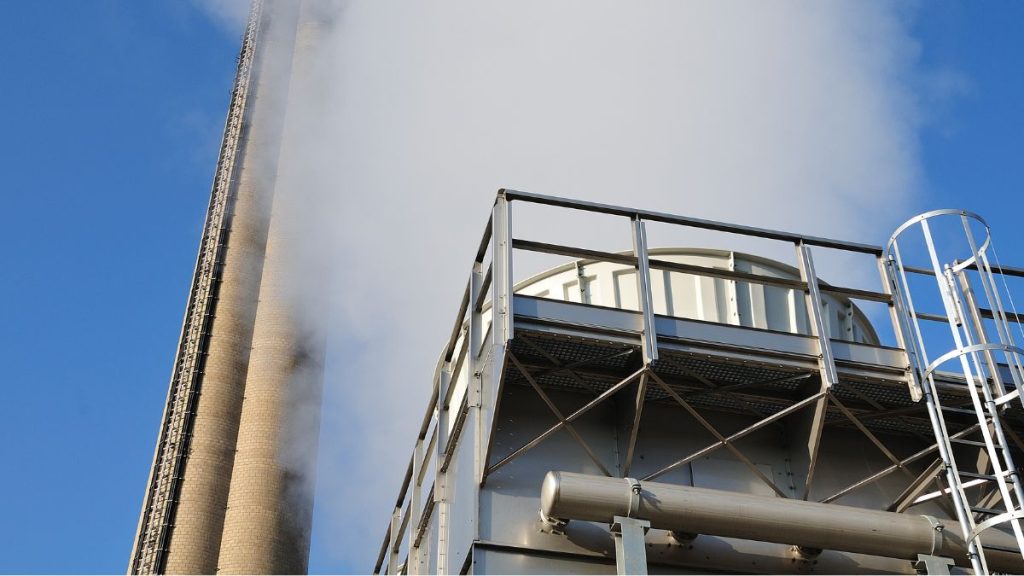
In cooling tower operations, dispersant plays an important role in preventing deposit buildup, maintaining clean heat transfer surfaces, and improving overall system performance. Without proper dispersant treatment, suspended particles, sludge, and organic contaminants can accumulate inside the cooling system, leading to reduced efficiency, increased energy consumption, and higher maintenance costs.
For industries that rely heavily on cooling towers, understanding how dispersants work is essential to maintaining reliable and efficient operations.
What is a Dispersant?
Dispersant is a type of water treatment chemical designed to keep suspended solids, dirt, corrosion byproducts, and organic materials evenly distributed within the water system. Instead of allowing these particles to settle and form deposits, dispersants help keep them suspended so they can be removed through blowdown or filtration processes.
In cooling tower systems, various contaminants continuously enter the circulating water, including:
- Dust and airborne particles
- Corrosion products such as iron oxide
- Biological debris
- Process contamination
- Scale particles
Without proper control, these materials can accumulate and create sludge, fouling, and blockages within pipelines, heat exchangers, and cooling tower components.
Dispersants work by preventing particles from clumping together. This helps maintain cleaner system surfaces and supports more stable cooling tower performance.
Read Also: Slimy Cooling Tower: Causes, Fixes, and How to Prevent It Effectively
Why Are Dispersants Used in Cooling Towers?
Cooling towers operate under conditions that naturally encourage contamination buildup. Warm temperatures, continuous evaporation, and constant exposure to the environment make cooling systems highly vulnerable to fouling issues.
Using dispersants helps address several operational challenges.
1. Preventing Fouling and Deposit Formation
One of the main functions of dispersants is to prevent suspended solids from settling on equipment surfaces. Deposit buildup can reduce heat transfer efficiency and restrict water flow.
When heat exchangers become fouled, the cooling system must work harder to achieve the same performance, resulting in higher energy usage.
2. Improving Heat Transfer Efficiency
Clean heat-transfer surfaces are critical to maintaining cooling tower efficiency. Even a thin layer of deposits can significantly reduce thermal conductivity.
Dispersants help maintain cleaner surfaces, allowing heat exchangers and condensers to operate more effectively.
3. Reducing Maintenance and Downtime
Sludge accumulation can cause clogging in pipelines, nozzles, and cooling tower fill media. Over time, this may require frequent cleaning and maintenance shutdowns.
By minimizing particle deposition, dispersants help reduce operational interruptions and maintenance frequency.
4. Supporting Other Water Treatment Chemicals
Dispersants are often used alongside scale inhibitors, corrosion inhibitors, and biocides as part of a complete cooling water treatment program.
A balanced chemical treatment program helps maintain stable water quality and protects cooling tower equipment from multiple risks simultaneously.
5. Maintaining System Reliability
Poor water quality management can eventually lead to equipment damage, production inefficiencies, and unexpected downtime.
Using dispersants as part of a preventive treatment strategy helps improve long-term system reliability and operational stability.
Types of Dispersant
Different cooling tower conditions require different types of dispersants. The selection depends on water quality, contamination levels, operating conditions, and system design.
1. Polymeric Dispersants
Polymeric dispersants are commonly used in industrial cooling water systems. These chemicals help stabilize suspended particles and prevent them from agglomerating.
They are effective in controlling:
- Iron fouling
- Silica particles
- Organic contamination
- Sludge accumulation
Polymeric dispersants are widely used because they offer stable performance under varying operating conditions.
2. Phosphonate-Based Dispersants
Phosphonate dispersants are often used in systems where scale control is also required. Besides dispersing suspended solids, they can help inhibit scale formation caused by calcium and other mineral deposits.
These dispersants are commonly applied in high-hardness water conditions.
3. Bio-Dispersants
Bio-dispersants are designed to break down biofilm and biological slime within cooling systems. They are usually applied together with biocides to improve microbiological control.
Biofilm can reduce heat transfer efficiency and create an environment for bacterial growth, including harmful microorganisms.
4. Natural or Environmentally Friendly Dispersants
Some facilities now use environmentally friendly dispersants to support sustainability goals and environmental compliance requirements.
These products are typically selected for operations seeking lower environmental impact while maintaining effective system treatment.
Baca Juga: Understanding Cycles of Concentration in Cooling Towers
Key Considerations When Using Dispersants
Although dispersants are highly effective, proper application is important to achieve optimal results.
Several factors should be evaluated:
1. Water Quality Analysis
Understanding the composition of cooling water is essential before selecting a dispersant program. Parameters such as TSS, hardness, pH, conductivity, iron concentration, and organic contamination influence chemical selection.
2. Dosage Control
Overdosing or underdosing dispersants can reduce treatment effectiveness. Accurate dosing control helps maintain stable performance and optimize chemical usage.
Read Also: pH Adjuster: The Key to Stable and Efficient Water Treatment
3. Compatibility with Other Chemicals
Dispersants must be compatible with other treatment chemicals used within the system, including corrosion inhibitors and biocides.
A properly integrated treatment program helps prevent unwanted chemical interactions.
4. Monitoring and Maintenance
Regular monitoring helps ensure the dispersant program continues to perform effectively. Cooling tower treatment should include routine inspections, water analysis, and operational evaluation.
Supporting Cooling Tower Performance with the Right Water Treatment Approach
Effective dispersant treatment is not only about adding chemicals into the system. It requires proper evaluation, dosing strategy, monitoring, and operational understanding to ensure the cooling tower operates efficiently and reliably.
As an integrated water treatment solutions provider, Lautan Air Indonesia supports industries with comprehensive cooling water treatment programs tailored to operational needs. From water quality analysis and chemical selection to system monitoring and technical support, LAI helps industries maintain cleaner and more efficient cooling tower systems.
LAI’s solutions can support industries in:
- Controlling fouling and sludge buildup
- Improving heat transfer efficiency
- Reducing maintenance frequency
- Supporting operational reliability
- Optimizing cooling water treatment performance
With extensive experience in industrial water treatment applications, LAI works closely with customers to develop practical and sustainable cooling water management strategies.
Looking to improve your cooling tower performance and reduce fouling issues? Explore industrial water treatment solutions with Lautan Air Indonesia and discover how the right dispersant program can support more efficient and reliable operations.