
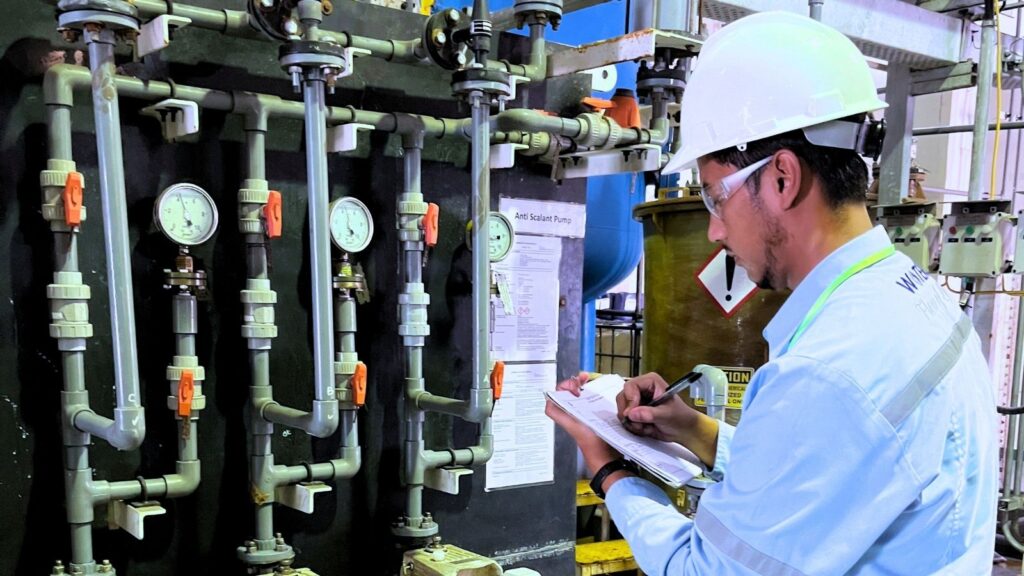
Preventive Maintenance vs Reactive Maintenance is an important consideration for any industrial water treatment system. While reactive maintenance addresses equipment problems after they occur, preventive maintenance focuses on identifying and managing potential issues before they develop into failures.
In water treatment operations, this difference can influence equipment availability, treatment performance, maintenance costs, and operational continuity.
For facilities that depend on consistent water treatment performance, the objective is not simply to repair equipment when something goes wrong. It is to maintain the system in a condition that supports stable operation.
Preventive Maintenance vs Reactive Maintenance: What Is the Difference?
The key difference is when maintenance takes place and what triggers the intervention.
Preventive maintenance is planned in advance. Inspections, cleaning, calibration, servicing, adjustments, and component replacement are performed based on operating conditions, equipment requirements, maintenance history, or defined schedules.
Reactive maintenance takes place after a failure, malfunction, or significant deterioration has already occurred.
| Preventive Maintenance | Reactive Maintenance |
| Planned before failure | Performed after a problem occurs |
| Focuses on preventing deterioration | Focuses on restoring operation |
| Can be scheduled around operations | May require unplanned intervention |
| Helps identify developing problems | Responds to existing problems |
| Supports more predictable maintenance planning | Can result in unexpected downtime |
Reactive maintenance is not necessarily avoidable. Unexpected equipment failures can happen even in well-maintained systems. However, relying primarily on reactive maintenance can make water treatment operations more difficult to predict and manage.
Research on wastewater treatment plants found that increasing preventive maintenance was associated with lower repair costs, while preventive maintenance policies also helped reduce energy consumption and the risk of breakdowns.
Why Preventive Maintenance Matters in Water Treatment
A water treatment system consists of interconnected equipment and processes. Pumps, dosing systems, filters, membranes, valves, instruments, and control systems all contribute to overall treatment performance.
A problem in one component can affect other parts of the system.
For example, a pump operating outside its normal condition may affect flow and pressure. A dosing system that is not functioning properly can affect chemical application. Filter fouling can increase pressure drop, while membrane fouling can reduce capacity and increase energy requirements.
These problems may start as relatively small deviations. Without timely attention, however, they can develop into more significant operational issues.
Preventive maintenance provides an opportunity to identify these conditions earlier.
1. Reduce the Risk of Unplanned Downtime
Equipment failure can interrupt the treatment process and require immediate troubleshooting or repair.
For industrial facilities, an unexpected interruption may affect more than the treatment system itself. If treated water is required for production, utilities, or other critical processes, equipment downtime can potentially affect overall operations.
Planned maintenance allows inspections and servicing to be carried out before equipment reaches a critical condition.
Research involving water supply maintenance systems has also highlighted equipment availability and repair time as important indicators for evaluating maintenance performance.
Read Also: Differential Pressure in an RO System: What Is Normal, What Causes It, and When to Take Action
2. Maintain Treatment Performance
Maintenance should not only focus on whether equipment is still running.
The more important question is whether the equipment continues to perform its intended function.
Depending on the treatment system, this may include:
- Maintaining required flow and pressure
- Ensuring consistent chemical dosing
- Controlling filter pressure drop
- Maintaining membrane performance
- Keeping pumps and motors within appropriate operating conditions
- Ensuring valves and instruments function correctly
- Monitoring changes in water quality and treatment performance
This makes maintenance part of the overall operational strategy, rather than a separate activity that only takes place when equipment fails.
3. Manage Maintenance and Repair Costs
Reactive maintenance can involve more than the cost of replacing a failed component.
An unexpected failure may require emergency labor, spare parts, troubleshooting, equipment replacement, or additional intervention. If the failure affects the treatment process, there may also be operational consequences.
A 2020 study of wastewater treatment plants found that greater preventive maintenance was associated with lower repair costs and that preventive maintenance planning could reduce the risk of equipment breakdowns.
This does not mean that every piece of equipment should simply be maintained as frequently as possible.
A more effective approach is to determine maintenance requirements based on equipment criticality, operating conditions, failure history, and the consequences of equipment failure.
What Does Preventive Maintenance Look Like in Water Treatment?
Preventive maintenance needs to reflect the actual configuration and operating conditions of the treatment system.
Depending on the facility, activities can include:
1. Equipment Inspection
Regularly checking pumps, motors, dosing systems, filters, membranes, valves, instruments, and other critical components can help identify abnormal conditions before they become major failures.
2. Cleaning and Servicing
Accumulation of deposits, fouling, or contaminants can affect equipment performance. Planned cleaning and servicing can help maintain equipment within its intended operating condition.
3. Calibration and Adjustment
Dosing equipment, sensors, meters, and other instruments may require periodic calibration or adjustment to maintain measurement and control accuracy.
4. Performance Monitoring
Maintenance decisions can be supported by monitoring operational parameters such as:
- Flow rate
- Pressure
- Differential pressure
- Water quality
- Chemical consumption
- Energy consumption
- Equipment operating condition
Changes in these parameters can provide useful indications of developing problems.
5. Component Replacement
Wear components can be replaced based on condition, operating history, or recommended service intervals before deterioration results in equipment failure.
6. Maintenance Records
Recording inspections, abnormalities, repairs, replacements, and equipment performance provides a basis for identifying recurring problems and improving future maintenance planning.
For water utilities, research has emphasized the value of monitoring maintenance performance using indicators such as availability efficiency, repair time efficiency, Mean Time Between Failure, and Mean Time To Repair.
Read Also: How Preventive Maintenance Helps Reduce Chemical Consumption in Water Treatment
When Is Reactive Maintenance Still Necessary?
Even with a preventive maintenance program, reactive maintenance will remain part of water treatment operations.
Some failures are difficult to predict. Components can fail unexpectedly, operating conditions can change, and external events can affect equipment.
Reactive maintenance may be required when:
- A critical component suddenly fails
- Equipment performance falls outside acceptable limits
- A pump or motor experiences an unexpected problem
- A dosing system malfunctions
- A valve develops a mechanical issue
- An instrument or control component stops functioning
- Immediate corrective action is required to protect the treatment process
Therefore, the objective is not to eliminate reactive maintenance completely.
The objective is to reduce avoidable reactive maintenance by identifying and addressing problems earlier.
Moving from Maintenance Schedules to Operational Management
A maintenance schedule alone does not guarantee reliable water treatment performance.
Maintenance activities need to be connected to how the treatment system operates.
For example, two pumps with the same specifications may require different levels of attention if they operate under different loads, duty cycles, water characteristics, or process conditions.
An effective maintenance strategy should therefore consider:
1. Equipment criticality
Which equipment could significantly affect treatment continuity if it fails?
2. Operating conditions
How frequently does the equipment operate, and under what conditions?
3. Failure history
What problems have occurred previously?
4. Performance indicators
Are flow, pressure, water quality, energy consumption, or chemical consumption changing?
5. Maintenance history
Which components have required repeated intervention?
6. Process requirements
What level of equipment availability and treatment performance does the facility require?
This approach helps shift maintenance from simply responding to equipment failures toward managing the reliability of the overall treatment operation.
Supporting Reliable Water Treatment Operations
For facilities operating their own water treatment systems, maintaining equipment consistently requires more than a maintenance checklist.
It requires an understanding of the treatment process, equipment condition, operating requirements, maintenance priorities, and potential impact of equipment failure.
This is where an Operation & Maintenance approach can provide additional support.
O&M Support Based on Your Treatment Needs
Lautan Air Indonesia provides Operation & Maintenance (O&M) services for water treatment systems, supporting customers in managing their treatment operations and maintaining system performance.
Depending on the facility’s requirements, O&M support can include routine equipment inspection, operational monitoring, maintenance activities, troubleshooting, and technical support.
The scope can be adapted to the specific treatment system and operational priorities of each facility.
Rather than waiting until equipment failure becomes an operational issue, the maintenance approach can focus on identifying potential problems, maintaining critical equipment, and supporting consistent treatment performance.
The goal is to help your water treatment system remain ready to perform when your operation needs it.
Preventive Maintenance vs Reactive Maintenance: Which Approach Is Better?
When comparing Preventive Maintenance vs Reactive Maintenance, preventive maintenance provides a more proactive foundation for managing equipment reliability and operational continuity.
Reactive maintenance remains necessary when unexpected failures occur, but relying on it as the primary strategy can make maintenance requirements less predictable.
A practical water treatment maintenance strategy therefore combines both approaches:
- Preventive maintenance to identify and address potential problems before they become major failures.
- Reactive maintenance to respond quickly when unexpected problems occur.
The key is finding the right balance based on the equipment, treatment process, operating conditions, and business requirements.
Keep Your Water Treatment System Ready for Operation
Reliable water treatment is not only about having the right equipment. It also depends on how consistently that equipment is operated, monitored, and maintained.
A proactive maintenance approach can help facilities identify potential issues earlier, manage equipment condition, and support more consistent treatment operations.
Discuss your water treatment O&M requirements with Lautan Air Indonesia and explore an approach suited to your facility.
Reference
Hernández-Chover, V., Castellet-Viciano, L., & Hernández-Sancho, F. (2020). Preventive maintenance versus cost of repairs in asset management: An efficiency analysis in wastewater treatment plants. Process Safety and Environmental Protection, 141, 215-221.
Sarfaraz, A. H., Yazdi, A. K., Hanne, T., Wanke, P. F., & Hosseini, R. S. (2023). Assessing repair and maintenance efficiency for water suppliers: A novel hybrid USBM-FIS framework. Operations Management Research, 16, 1321-1342.