A blowdown cooling system plays a critical role in maintaining cooling system efficiency, water balance, and equipment reliability. When not properly managed, dissolved solids continue to build up inside the system, creating conditions that lead to scaling, corrosion, and biological fouling. These problems do not always appear immediately, but once they develop, they increase operating costs and reduce system performance significantly.
This article explains what a blowdown cooling system is, why it is important, how to optimize it, and the common challenges industries face in daily operations.
What Is a Blowdown Cooling System and Why It Matters
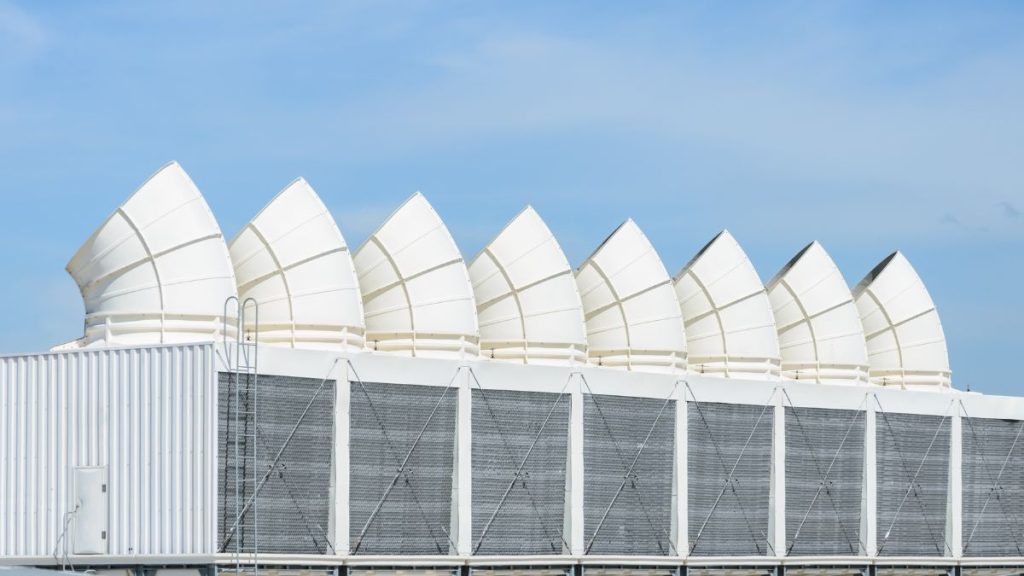
A blowdown cooling system refers to the controlled removal of a portion of circulating water from a cooling system, usually from a cooling tower, to control the concentration of dissolved solids.
During operation, water evaporates as it removes heat. However, minerals and impurities do not evaporate. They remain in the system and continue to accumulate. If left unchecked, this buildup creates several operational risks:
- Scaling that reduces heat transfer efficiency
- Corrosion that damages pipes and equipment
- Fouling caused by biological growth and suspended solids
Blowdown works by removing high concentration water and replacing it with fresh makeup water. This helps maintain a stable level of dissolved solids and keeps the system within safe operating limits.
A well-managed blowdown cooling system supports stable cycles of concentration, improves heat transfer, and reduces the risk of unplanned downtime. It also helps control chemical consumption and maintenance costs.
Read Also: Corrosion Inhibitor: Maximum Protection for Your Cooling System
How to Optimize a Blowdown Cooling System
Optimization is about achieving balance. Too much blowdown wastes water and chemicals, while too little increases the risk of scaling and fouling.
1. Control Cycles of Concentration
Cycles of concentration, or CoC, indicate how concentrated the dissolved solids are compared to the makeup water. Higher CoC improves water efficiency but also increases scaling risk.
The goal is to maintain an optimal CoC based on water quality and system design. This requires regular monitoring and adjustment, especially when raw water conditions change.
2. Use Automated Blowdown Control
Manual blowdown often leads to inconsistent results. Automated systems that rely on conductivity sensors provide more accurate control.
These systems discharge water only when conductivity exceeds a set limit. This ensures stable operation, reduces human error, and improves overall efficiency.
3. Apply the Right Chemical Treatment
Chemical treatment allows systems to operate at higher CoC without increasing the risk of damage. A proper program typically includes:
- Scale inhibitors to prevent mineral deposits
- Corrosion inhibitors to protect metal surfaces
- Biocides to control microbial growth
When properly selected and applied, these chemicals reduce the need for excessive blowdown while maintaining system integrity.
4. Monitor Key Parameters
Consistent monitoring is essential for optimization. Key parameters include:
- Conductivity
- pH
- Total Dissolved Solids
- Microbial activity
With accurate data, operators can make timely adjustments and prevent small issues from becoming major problems.
Read Also: Cooling Water Treatment: How It Works, Dangers If Ignored, and Solutions
Common Challenges in Blowdown Cooling Systems
Many facilities implement blowdown but still experience performance issues. This usually comes from poor control or lack of system integration.
1. Over-Blowdown
Excessive blowdown increases water and chemical consumption. This often happens when systems are operated conservatively without proper monitoring. While it may reduce scaling risk, it leads to unnecessary operational costs.
2. Under-Blowdown
Insufficient blowdown allows dissolved solids to accumulate. Over time, this results in scale formation, reduced heat transfer, and higher energy usage. In severe cases, it can cause equipment damage.
3. Fluctuating Water Quality
Changes in raw water quality can affect system stability. Without proper adjustment, maintaining optimal CoC becomes difficult, and performance may decline.
4. Limited System Visibility
Some operations rely on manual checks and lack real-time monitoring. This makes it harder to detect changes early and respond effectively.
Improving Blowdown Performance with the Right Support
Managing a blowdown cooling system effectively requires a combination of chemical treatment, monitoring, and operational control.
Lautan Air Indonesia supports industrial cooling systems through a practical and integrated approach. This includes customized chemical programs designed for specific water conditions, along with reliable solutions for scale, corrosion, and biological control.
In addition, LAI provides monitoring and control support to help maintain stable system performance. With technical expertise and on-site evaluation, adjustments can be made based on actual operating conditions rather than assumptions.
This approach helps improve efficiency, reduce water and chemical usage, and extend equipment life without adding unnecessary complexity to operations.
If your cooling system is experiencing scaling, high water usage, or inconsistent performance, it may be time to review your blowdown strategy.
Lautan Air Indonesia can help you evaluate your current system and identify practical improvements based on your operating conditions. Reach out to our team to discuss how a more optimized blowdown cooling system can improve your efficiency and reduce costs.