
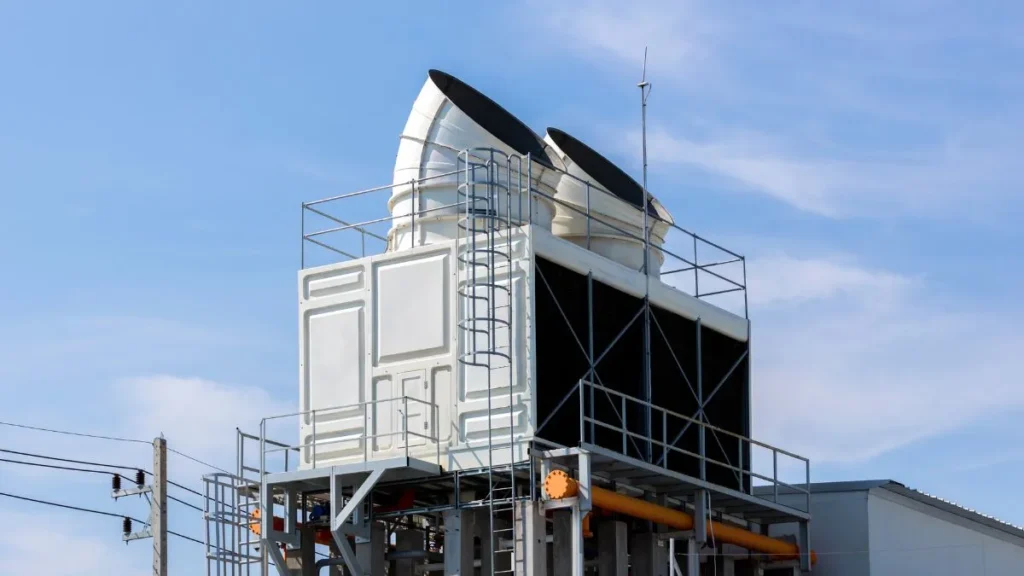
A well maintained cooling tower is essential to prevent temperature instability, scale buildup, corrosion, and unnecessary energy loss in industrial cooling systems. Many facilities only recognize cooling tower problems once efficiency drops and operational costs rise.
This article provides a solution focused explanation of cooling towers, how they work, and what operational steps industries can apply to keep performance optimal.
What is a Cooling Tower and How It Works
A cooling tower is a mechanical unit designed to reduce the temperature of water by bringing water and air into direct contact. Hot water from industrial equipment is distributed inside the cooling tower, where part of the water evaporates and carries heat away. The remaining water returns to the system at a lower temperature.
Cooling towers are widely used in HVAC systems and industrial facilities that require consistent cooling to maintain stable production quality.
Read Also: Cooling Water Treatment: How It Works, Dangers If Ignored, and Solutions
Why Industries Use Cooling Towers
A cooling tower provides several performance advantages, especially for facilities that run continuous production. Key purposes include:
1. Maintaining Thermal Efficiency
Industrial processes generate high heat. Without proper cooling, equipment becomes inefficient. Cooling towers stabilize temperatures so systems run at optimal performance.
2. Extending Equipment Life
Higher temperature accelerates wear and damage. Cooling towers help keep equipment within safe operational limits, extending machine lifespan.
3. Reducing Energy and Operating Costs
A controlled temperature allows equipment to work more efficiently and reduces the need for constant maintenance. Cooling towers support closed loop water cycles that save operational costs.
4. Supporting Consistent Product Quality
In sectors such as food and beverage, pharmaceutical, chemical, and petrochemical, stable cooling is crucial. Cooling towers make temperature control predictable and consistent.
Types of Cooling Towers Used in Industry
Cooling tower designs vary depending on facility size, cooling demand, and installation requirements. The most common types include:
1. Natural Draft Cooling Tower
This type uses natural airflow to evaporate water. It is typically tall and used in large scale facilities such as power plants. Energy use is low, but installation requires large space.
2. Mechanical Draft Cooling Tower
This type uses fans to control airflow and is divided into two designs:
- Forced Draft: Fans push air from the bottom.
- Induced Draft: Fans pull air from the top, producing more stable cooling.
Mechanical draft types are flexible and suited for many industrial applications.
3. Crossflow and Counterflow Cooling Tower
The two differ in water and air flow direction:
- Crossflow: Air flows horizontally through falling water. Easy to maintain.
- Counterflow: Air flows upward against water flow. More compact and efficient.
Read Also: How to Overcome Increased Hardness in Cooling Systems?
Operational Challenges in Cooling Tower Systems
A cooling tower will naturally face performance challenges over time. Common issues include:
1. Scale and Fouling
Mineral deposits reduce heat transfer efficiency and restrict water flow.
2. Biological Growth
Biofilm, algae, and bacteria can clog the system and affect health and safety.
Read Also: How to Prevent Algae in Cooling Water Systems
3. Corrosion
Metal surfaces deteriorate due to water chemistry imbalance and humidity.
4. Reduced Mechanical Performance
Fans, pumps, and distribution systems may lose effectiveness due to wear or improper maintenance.
Without intervention, these issues can lead to overheating, higher energy consumption, and unexpected equipment downtime.
Cooling Tower Solutions by Lautan Air Indonesia
To help industries maintain reliable cooling tower performance, Lautan Air Indonesia provides a complete set of solutions that are operational, measurable, and aligned with industrial needs.
1. Water Treatment Chemicals for Cooling Tower Protection
We supply specialized chemicals designed for cooling system stability, including:
- Antiscalant to prevent scale formation
- Corrosion inhibitor to protect metal components
- Biocide to control bacterial and algae growth
- Dispersant to reduce suspended deposits
These products prevent system degradation and ensure consistent temperature control.
2. Comprehensive Water Monitoring and Analysis
Our team conducts periodic testing of cooling tower water quality. Parameters such as pH, TDS, hardness, and chemical dosage are analyzed to maintain water balance and prevent operational risk.
3. Technical Support and Troubleshooting Services
Lautan Air Indonesia provides on site technical support to diagnose issues such as scaling, fouling, corrosion, and efficiency reduction. Our engineers help optimize system design and operation.
4. Operation and Maintenance Services
We offer integrated cooling tower operation and maintenance solutions. Services include routine inspection, minor repairs, chemical replenishment, and detailed performance reporting.
Maintain Peak Cooling Tower Performance with Professional Support
A cooling tower that is not properly maintained can cause serious operational disruptions. Scale, corrosion, and biological growth can significantly increase energy consumption and endanger equipment reliability. Ensuring that your cooling tower receives the right treatment is an investment in long term operational stability.
For consultation, maintenance plans, or a field survey, contact Lautan Air Indonesia today. We are ready to help you maintain stable, efficient, and safe cooling tower performance in your industrial facility.