
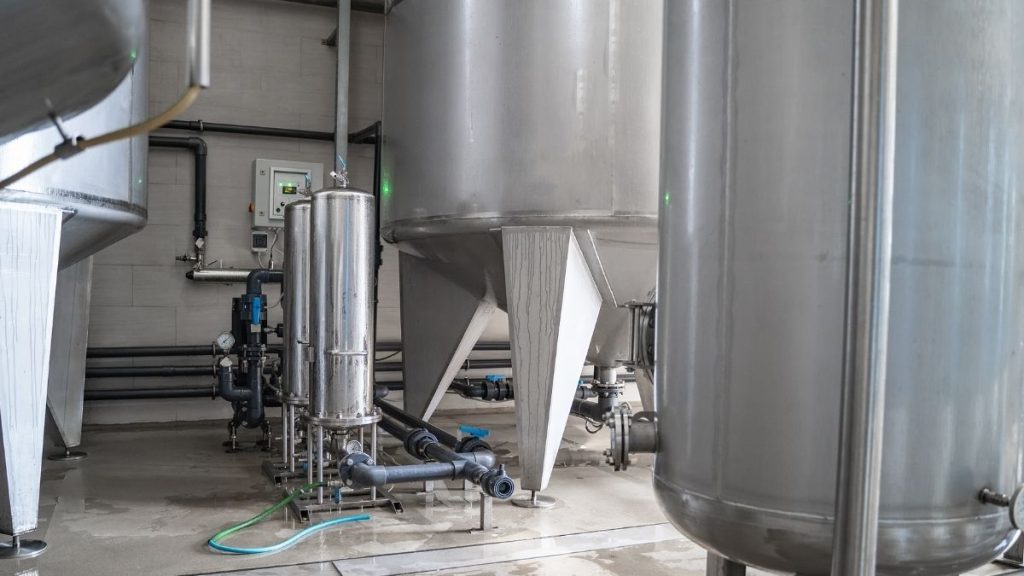
Brewery water Treatment challenges often begin with the fact that water is used throughout almost every stage of beer production. Brewing, fermentation, cleaning, packaging, and sanitation can generate wastewater with high organic loads, suspended solids, fluctuating pH, and variable flow. The most effective approach is therefore to understand where wastewater comes from, characterize its quality, and select treatment processes based on the actual operating conditions.
A 2021 review found that brewery wastewater mainly originates from processing and equipment cleaning and can contain significant organic matter requiring appropriate treatment before discharge or reuse.
Common Brewery Water Treatment Challenges
1. High Organic Load
Brewery wastewater can contain sugars, starches, ethanol, proteins, yeast, and other biodegradable materials. These compounds contribute to high BOD and COD, which can place a significant load on biological treatment systems.
The challenge is that organic loading is not always consistent. Fermentation and filtration streams, for example, can be relatively concentrated, while cleaning activities can generate larger volumes of more diluted wastewater.
Operational solution: Regular wastewater characterization and load monitoring can help operators adjust treatment conditions and prevent biological systems from being overloaded.
2. Fluctuating pH and Wastewater Quality
Wastewater characteristics can change throughout the production cycle. Cleaning chemicals may affect pH, while process residues can change organic and solids loading.
These fluctuations can disrupt biological treatment if they are not properly managed.
Operational solution: Equalization and pH control can help stabilize wastewater before it enters downstream treatment processes.
3. Suspended Solids and Brewing Residues
Brewing residues such as spent grains, yeast, proteins, and other solids can enter wastewater streams. Excessive solids can increase the load on downstream treatment equipment and contribute to sludge generation.
Operational solution: Screening and appropriate primary separation can remove larger solids and reduce the load reaching biological treatment.
4. Variable Wastewater Flow
Wastewater generation can vary significantly depending on production schedules and cleaning activities. A sudden increase in flow or pollutant concentration can affect treatment stability.
Operational solution: Equalization tanks can help balance hydraulic and organic loading, providing more consistent conditions for downstream processes.
Read Also: Understanding Equalization Tanks: Their Role, Maintenance, and Solutions
Understanding the Brewing Process
Understanding the brewing process is essential because the majority of brewery wastewater is generated from processing and equipment cleaning activities. Research indicates that brewery wastewater can come from multiple stages, including malting, brewing, fermentation, filtration, packaging, and cleaning.
Each stage can contribute different pollutants:
- Brewing: Organic residues, sugars, starches, and suspended solids
- Fermentation: Yeast, residual sugars, ethanol, and biodegradable organic matter
- Filtration: Suspended solids and concentrated organic residues
- Packaging: Product residues and cleaning wastewater
- Cleaning and sanitation: High wastewater volumes and cleaning chemicals
This is why treating all wastewater as one uniform stream can make optimization more difficult. Identifying concentrated streams and understanding when wastewater is generated can help improve treatment performance and reduce unnecessary treatment loads.
Brewery Wastewater Treatment Solutions
A brewery wastewater treatment system generally combines several treatment stages rather than relying on one technology.
1. Pretreatment and Solid Separation
Screening and other physical separation processes can remove larger solids and protect downstream equipment. This is particularly useful when wastewater contains significant process residues.
2. Equalization and pH Adjustment
Equalization helps balance variations in wastewater flow and pollutant concentration. pH adjustment may also be required to create suitable conditions for subsequent biological treatment.
3. Coagulation and Flocculation
Where suspended solids and other particulate contaminants are significant, coagulation and flocculation can support their removal before biological treatment.
Chemical selection and dosage should be based on actual wastewater characteristics rather than applying a fixed dosage across different facilities.
4. Biological Treatment
Because brewery wastewater contains substantial biodegradable organic matter, biological treatment is commonly used for BOD and COD reduction.
Both aerobic and anaerobic systems have been investigated for brewery wastewater. Anaerobic treatment can also provide an opportunity for biogas recovery when treating suitable high-strength wastewater.
5. Tertiary Treatment and Water Reuse
When treated wastewater is intended for reuse, additional treatment may be required.
A 2021 study evaluated membrane-based treatment trains combining ultrafiltration, microfiltration, and reverse osmosis for brewery wastewater reuse. The research demonstrated the potential of membrane processes to produce higher-quality water, while also highlighting the importance of controlling membrane fouling and optimizing operating conditions.
The appropriate treatment level ultimately depends on the intended application, such as cooling, cleaning, irrigation, or other industrial uses.
Read Also: Water Treatment: What It Is, How It Works, and Why It Matters
Finding the Right Treatment Approach for Your Brewery
Brewery wastewater treatment is not a one-size-fits-all process. Differences in production capacity, wastewater characteristics, cleaning practices, discharge requirements, and reuse objectives can significantly affect treatment design and operation.
Lautan Air Indonesia (LAI) can support industrial water and wastewater treatment requirements by combining water treatment chemicals, laboratory analysis, treatment solutions, and operational expertise.
The process can start with understanding the wastewater characteristics and identifying the main treatment challenges. From there, the appropriate combination of chemical, physical, biological, and advanced treatment processes can be considered based on the facility’s requirements.
This approach helps breweries focus not only on meeting discharge requirements, but also on maintaining stable treatment performance as production conditions change.
Improve Your Brewery Wastewater Treatment Strategy
Effective brewery wastewater management starts before wastewater reaches the treatment plant. Understanding where wastewater is generated, identifying variations in quality and flow, and selecting treatment processes based on actual conditions can help improve overall treatment performance.
If your brewery is facing high organic loads, unstable treatment performance, variable wastewater quality, or increasing water reuse requirements, the right treatment strategy can make a significant operational difference.
Talk to Lautan Air Indonesia to discuss your brewery water and wastewater treatment requirements and explore a treatment approach suited to your operation.
Reference
- Ashraf, A., Ramamurthy, R., & Rene, E. R. (2021). Wastewater treatment and resource recovery technologies in the brewery industry: Current trends and emerging practices. Sustainable Energy Technologies and Assessments, 47, 101432.
- Toran, M. S., et al. (2021). Membrane-Based Processes to Obtain High-Quality Water From Brewery Wastewater. Frontiers in Chemical Engineering, 3, 734233.
- Treatment of brewery wastewater and its use for biological production of methane and hydrogen (2017). International Journal of Hydrogen Energy.
- Current advances in the brewery wastewater treatment from anaerobic digestion for biogas production: A systematic review (2023). Environmental Research.