
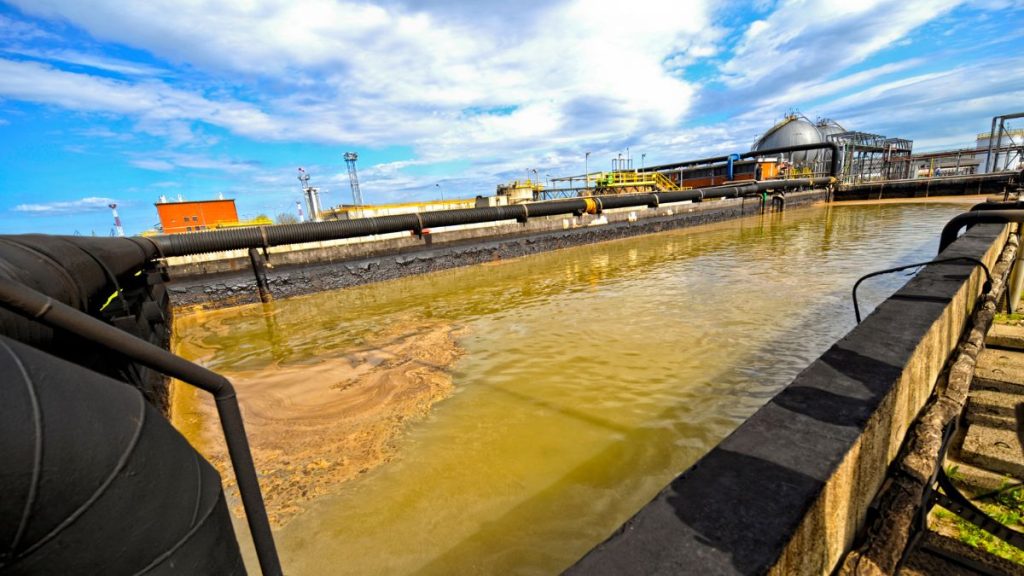
Pulp and paper wastewater treatment requires a treatment strategy that responds to the characteristics of each production process. Wastewater from pulp and paper mills can contain organic matter, suspended solids, color, lignin derivatives, and other compounds, while its composition can vary depending on the raw materials, pulping process, product, and bleaching activities.
For this reason, an effective wastewater treatment system should do more than meet an effluent limit. It should be able to handle variations in wastewater quality and loading while maintaining stable operation. Where treated water reuse is part of the objective, the treatment process also needs to achieve the additional quality requirements for its intended application.
Challenges in Pulp and Paper Wastewater Treatment
1. Wastewater Characteristics Vary Between Processes
Pulp and paper production involves multiple processes, from pulping and washing to bleaching and paper production. Each stage can contribute different pollutants to the wastewater stream.
Research has found considerable variation in wastewater characteristics depending on the type of raw material, production process, and final paper product. Parameters commonly considered include COD, BOD, suspended solids, color, organochlorine compounds, and phenolic compounds.
This variability makes wastewater characterization an important starting point. Treatment systems designed without considering actual wastewater conditions may have difficulty responding to changes in hydraulic flow or pollutant loading.
Read Also: Water Treatment for Mining Operations: Practical Treatment Approaches
2. Organic Matter and Refractory Compounds Can Be Difficult to Remove
Biological treatment is widely used to reduce biodegradable organic matter in pulp and paper wastewater. However, some compounds can be more resistant to biological degradation.
Lignin derivatives and other recalcitrant organic compounds can contribute to residual COD and color after conventional treatment. Reviews of pulp and paper wastewater treatment therefore highlight the use of combined physicochemical and biological processes when a single treatment stage cannot achieve the required effluent quality.
The practical challenge is determining which pollutants need to be removed at each treatment stage rather than applying additional treatment without a defined objective.
3. Color and Final Effluent Quality May Require Additional Treatment
Color can remain an important concern even after biological treatment. When higher-quality effluent is required, particularly for water reuse, tertiary treatment may be necessary.
Recent research has evaluated options including coagulation-flocculation, ozonation, granular activated carbon, ultrafiltration, and reverse osmosis for tertiary treatment of pulp and paper wastewater. The appropriate option depends on the target water quality, environmental impact, energy consumption, and economic considerations.
This means tertiary treatment should be selected according to the intended application of the treated water, rather than automatically adding advanced processes to the treatment train.
4. Stable Operation Is a Key Part of Treatment Performance
Treatment efficiency on paper does not always translate directly into stable plant operation. Changes in wastewater loading, operating conditions, aeration, chemical dosing, and sludge characteristics can influence actual performance.
A review in Water Environment Research highlighted the potential of process modeling, optimization, and hybrid treatment systems to improve pulp and paper effluent management.
Meanwhile, research on biological treatment has explored technologies such as moving-bed biofilm reactors (MBBR) and membrane bioreactors (MBR), including their potential role in achieving higher-quality treated water and supporting reuse.
For operators, this makes process control and monitoring just as important as the selection of treatment technology.
Read Also: What Is Membrane Bioreactor (MBR)?
Building the Right Treatment Approach
There is no single treatment configuration that applies to every pulp and paper mill. A treatment train may combine screening and equalization with physicochemical treatment, biological treatment, clarification, and tertiary treatment depending on the wastewater profile and final requirements.
The starting point should be the actual wastewater characteristics, including flow, pollutant loading, pH, COD, BOD, suspended solids, color, and other relevant parameters. From there, each treatment stage can be assigned a specific role.
For example, physicochemical treatment may be used to reduce suspended solids and selected organic compounds before biological treatment. Biological processes can then address biodegradable organic matter, while membrane or other tertiary processes may be considered when higher-quality effluent or water reuse is required.
Recent reviews emphasize that integrated and hybrid approaches can be useful for managing the complex characteristics of pulp and paper effluent.
Supporting Pulp and Paper Wastewater Treatment from Design to Operation
For industrial wastewater, process design and daily operation need to work together. LAI supports wastewater treatment applications by considering the treatment objectives, wastewater characteristics, process configuration, and operational requirements as part of one system.
This can involve engineering and process design to determine the appropriate treatment configuration, followed by equipment integration based on the required capacity and process conditions.
For facilities that require modular treatment, treatment skids and equipment can also be incorporated into the system according to the specific application.
Beyond the initial design, operation and maintenance support can help translate the designed process into day-to-day performance through process control, operational reporting, maintenance, and monitoring.
This approach is particularly relevant when wastewater conditions change with production activities. Instead of treating the WWTP as a standalone installation, its performance can be managed as part of the wider production and water management process.
From Wastewater Treatment to Better Water Management
Pulp and paper wastewater treatment can also support broader water management objectives. When treated effluent meets the appropriate quality requirements, reuse can become an option for reducing freshwater demand.
A 2024 study in Science of the Total Environment found that wastewater reuse can significantly influence the environmental performance of tertiary treatment systems, although the most appropriate technology depends on the intended reuse application.
The key is to define the treatment objective first: discharge compliance, improved effluent quality, or potential water reuse. From there, the treatment process can be developed around the actual wastewater conditions and operational requirements.
Looking to improve your pulp and paper wastewater treatment system? Contact us to discuss your wastewater characteristics, treatment objectives, and operational requirements.
Reference
- Kamali, M., Alavi-Borazjani, S. A., Khodaparast, Z., Khalaj, M., Jahanshahi, A., Costa, E., & Capela, I. (2019). Additive and additive-free treatment technologies for pulp and paper mill effluents: Advances, challenges and opportunities. Water Resources and Industry, 21, 100109.
- Elnakar, H., & Buchanan, I. D. (2019). Pulp and paper mill effluent management. Water environment research : a research publication of the Water Environment Federation, 91(10), 1069–1071.
- Patel, K., Patel, N., Vaghamshi, N., Shah, K., Dugdirala, S. M., & Dudhagara, P. (2021). Trends and strategies in the effluent treatment of pulp and paper industries: A review highlighting reactor options. Current research in microbial sciences, 2, 100077.
- Esmaeeli, A., Sarrafzadeh, M., Zeighami, S., Kalantar, M., Bariki, S. G., Fallahi, A., Asgharnejad, H., & Ghaffari, S. (2023). A Comprehensive Review on Pulp and paper Industries Wastewater Treatment Advances. Industrial & Engineering Chemistry Research, 62(21), 8119–8145.
- Mainardis, M., Ferrara, C., Cantoni, B., Di Marcantonio, C., De Feo, G., & Goi, D. (2024). How to choose the best tertiary treatment for pulp and paper wastewater? Life cycle assessment and economic analysis as guidance tools. The Science of the total environment, 906, 167598.