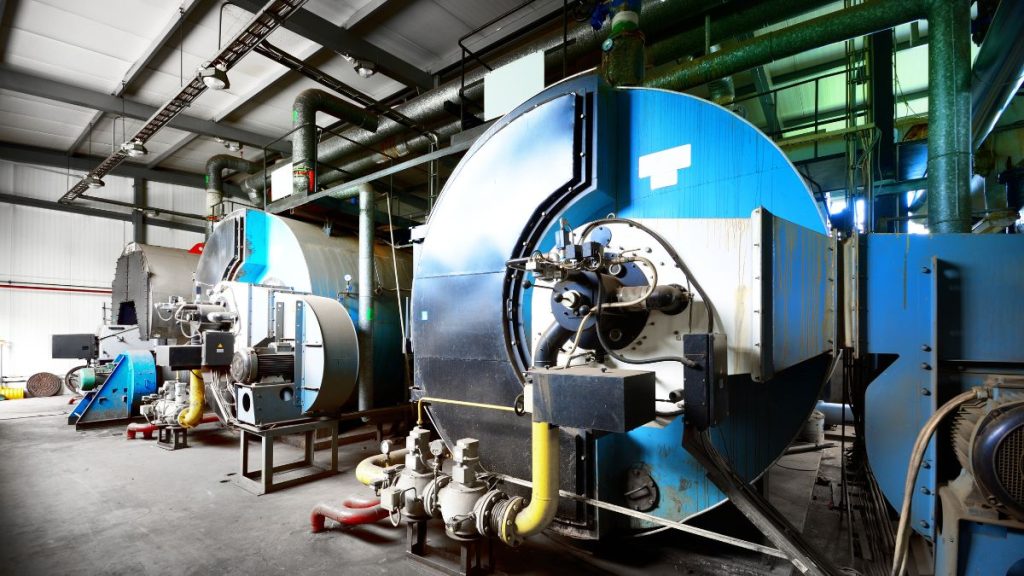
Corrosion in palm oil boiler can reduce boiler efficiency, damage tubes, increase maintenance requirements, and eventually lead to unplanned shutdowns. In palm oil mills, corrosion can develop when boiler water chemistry is not properly controlled, particularly when dissolved oxygen, pH, hardness, silica, chloride, and other dissolved minerals are outside the appropriate operating range.
The good news is that corrosion can be controlled through a combination of proper feedwater treatment, internal boiler water treatment, blowdown management, monitoring, and regular inspection. A 2022 study of boiler water quality across palm oil mills in Malaysia also highlighted the importance of monitoring parameters such as pH, hardness, TDS, iron, alkalinity, silica, sulphite, phosphate, chloride, and cycles of concentration.
What Causes Corrosion in Palm Oil Mill Boilers?
Corrosion is usually not caused by a single factor. It develops when water chemistry, deposits, operating conditions, and treatment practices are not properly controlled.
1. Dissolved Oxygen
Oxygen in boiler feedwater can accelerate oxidation of steel surfaces. If deaeration and oxygen scavenging are inadequate, dissolved oxygen can contribute to corrosion of boiler tubes and other metal components.
Recent research on steam generation equipment has identified dissolved oxygen as a direct contributor to tube corrosion, particularly when feedwater treatment and corrosion inhibitor programs are inadequate.
2. Improper pH
Boiler water needs to be maintained within an appropriate alkaline range to reduce corrosion risk. However, simply increasing alkalinity is not always the solution.
Excessive caustic concentration can create localized corrosive conditions, while insufficient alkalinity can also compromise corrosion control. Research on boiler tube failures has shown that caustic concentration and phosphate chemistry need to be carefully managed to avoid under-deposit and caustic corrosion.
3. Hardness and Mineral Deposits
Calcium and magnesium entering the boiler can form deposits when concentrated by evaporation. These deposits can reduce heat transfer and create conditions for under-deposit corrosion.
Palm oil mill boiler water studies have identified hardness, silica, TDS, and other mineral parameters as important indicators for boiler water management.
4. High TDS and Poor Blowdown Control
As water evaporates into steam, dissolved solids remain in the boiler. Without adequate blowdown, their concentration can increase and contribute to scaling, foaming, and corrosion risks.
Therefore, blowdown should be managed based on actual boiler water chemistry rather than treated simply as a routine operation.
5. Biomass Ash and Fireside Corrosion
Palm oil mills commonly use biomass such as palm fibre and shells as boiler fuel. The resulting ash can contain alkaline and other inorganic components that contribute to fouling and high-temperature corrosion on boiler surfaces.
A recent review of biomass-fired boilers found that alkali salts and other ash components can contribute to deposits and high-temperature corrosion, reducing boiler efficiency and service life.
Read Also: Palm Oil Boiler Water Treatment: A Practical Guide
How to Prevent Corrosion in Palm Oil Boiler
Effective corrosion prevention should address both water-side chemistry and fireside conditions. The following practices can help mills maintain more stable boiler operation.
1. Improve Feedwater Quality
Start with the water entering the boiler.
Depending on the raw water source and boiler requirements, treatment may include:
- Clarification and filtration
- Water softening
- Demineralization
- Reverse osmosis
- Deaeration
- Oxygen scavenging
The objective is to reduce hardness, dissolved solids, silica, and corrosive contaminants before they reach the boiler.
Research on palm oil mill boiler water treatment has also demonstrated the importance of cation and anion regeneration for reducing minerals in boiler feedwater.
2. Maintain Proper Boiler Water Chemistry
Boiler chemistry should be monitored consistently rather than adjusted only when corrosion or scaling becomes visible.
Key parameters may include:
- pH
- TDS
- Conductivity
- Total hardness
- Silica
- Chloride
- Phosphate
- Sulphite or oxygen scavenger residual
- Iron
- Alkalinity
The appropriate control limits depend on boiler design, pressure, feedwater quality, and treatment program, so targets should be established based on the specific system.
3. Control Dissolved Oxygen
A deaerator can help remove dissolved gases from boiler feedwater, while an appropriate oxygen scavenger program can address residual oxygen.
The treatment should be monitored rather than based solely on fixed chemical dosage. Changes in makeup water, condensate return, operating load, and deaerator performance can all affect oxygen levels.
4. Optimize Chemical Treatment
Chemical treatment should be designed around the actual water chemistry and boiler operating conditions.
Depending on the system, treatment can involve phosphate, alkalinity control, oxygen scavengers, dispersants, or other specialty boiler water chemicals.
More chemical does not necessarily mean better protection. Excessive alkalinity, for example, can contribute to caustic corrosion under certain conditions.
5. Manage Blowdown Properly
Blowdown removes concentrated dissolved solids from the boiler.
The objective is to maintain boiler water within the required chemistry limits while avoiding unnecessary water and chemical losses. Monitoring conductivity or TDS can help operators determine when blowdown needs adjustment.
6. Monitor Deposits and Corrosion Trends
Water analysis should be combined with physical inspection.
Operators should look for:
- Tube thinning
- Pitting
- Rust or oxide deposits
- Localized attack
- Scale deposits
- Unusual iron levels in boiler water
- Frequent tube leaks
- Changes in boiler efficiency
Research into boiler tube failures has shown that deposits can interact with boiler chemistry and contribute to under-deposit corrosion. Monitoring deposit composition and water chemistry can therefore support more effective preventive maintenance.
Read Also: What Is POME and Why Does It Need Treatment?
A More Practical Approach to Boiler Corrosion Control
Preventing corrosion in palm oil boiler is more effective when water treatment, chemical dosing, monitoring, and boiler operation are managed as one system.
Instead of responding only when tubes start leaking, mills can establish a routine program that includes:
Raw water analysis → Feedwater treatment → Boiler water monitoring → Chemical dosing → Blowdown optimization → Trend analysis → Inspection
This approach helps operators identify changes in water chemistry before they develop into serious corrosion or scaling problems.
Supporting Your Boiler Water Treatment Program with LAI
Every palm oil mill has different raw water characteristics, boiler conditions, and operating requirements. Because of this, a boiler water treatment program should be based on actual system conditions rather than a one-size-fits-all chemical dosage.
Lautan Air Indonesia (LAI) can support industrial water treatment requirements through water treatment chemicals, treatment solutions, and technical support designed around operational needs. For palm oil mills, this can include assessing water quality, identifying treatment requirements, and supporting the management of boiler water chemistry.
The goal is not simply to add chemicals. It is to help maintain stable water quality, protect boiler assets, and support consistent plant operation.
Keep Your Palm Oil Mill Boiler Protected
Corrosion prevention starts before tube failure occurs. By controlling feedwater quality, dissolved oxygen, pH, mineral concentration, chemical treatment, and blowdown, palm oil mills can reduce corrosion risks and maintain more reliable boiler operation.
If your mill is experiencing boiler corrosion, scaling, unstable boiler water parameters, or recurring tube problems, LAI can help assess the water treatment requirements and develop a treatment approach suited to your operating conditions.
Contact us to discuss your boiler water treatment needs and find the right approach for your palm oil mill.
Reference
- Rusdi, M. R. I., Bashkeran, T., & Ahmad, Z. (2022). Data Driven Technique for Palm Oil Mills Boiler Water Quality Monitoring in State of Perak Malaysia. Malaysian Journal of Fundamental and Applied Sciences, 18(2), 171-183. DOI: 10.11113/mjfas.v18n2.2242.
- Volara, W., & Nasution, R. S. (2021). Uji Kualitas Air Boiler pada Proses Pengolahan Kelapa Sawit di PT. X. AMINA, 3(1). DOI: 10.22373/amina.v3i1.1961.
- Kurniawan, M., Effendi, Z., & Purjianto. (2023). Regenerasi Kation dan Anion untuk Penurunan Mineral Air Umpan Boiler di Unit Pengolahan Air PT Bakrie Sumatera Plantations, Tbk Palm Oil Mill Kisaran. Agro Fabrica, 5(2).
- Assefinejad, A. H., Kermanpur, A., Eslami, A. M., & Kangazian, J. (2020). Failure investigation of water wall tubes in a drum boiler of a thermal power plant. Engineering Failure Analysis, 118, 104869.
- Pourabdollah, K. (2020). Fouling formation and under deposit corrosion of boiler firetubes. Journal of Environmental Chemical Engineering, 9(1), 104552. https://doi.org/10.1016/j.jece.2020.104552
- Khantisopon, K., Singh, S., Jitputti, J., Berndt, C. C., & Ang, A. S. M. (2024). High temperature corrosion resistant and anti-slagging coatings for boilers: a review. High Temperature Corrosion of Materials, 101(S1), 1–55. https://doi.org/10.1007/s11085-024-10251-0