In food and beverage manufacturing, the debate around CIP vs manual cleaning is becoming increasingly important as companies seek more efficient ways to maintain hygiene, reduce operational costs, and comply with strict food safety standards.
The cleaning method you choose affects not only sanitation performance but also water consumption, labor requirements, chemical usage, and production uptime. Understanding the differences between these two approaches is essential for selecting the most efficient solution for your facility.
When implemented correctly, an effective cleaning strategy can improve productivity, minimize downtime, and ensure consistent product quality throughout the manufacturing process.
Why Cleaning Efficiency Matters
Efficient cleaning goes beyond having clean equipment. It influences several critical aspects of manufacturing operations, including:
- Production uptime and equipment availability
- Water and chemical consumption
- Labor requirements
- Product consistency and quality
- Food safety compliance
- Overall operational costs
An inefficient cleaning process may lead to excessive water usage, longer production interruptions, inconsistent sanitation, and increased contamination risks. Therefore, selecting the right cleaning strategy is an important operational decision.
Overview of Manual Cleaning
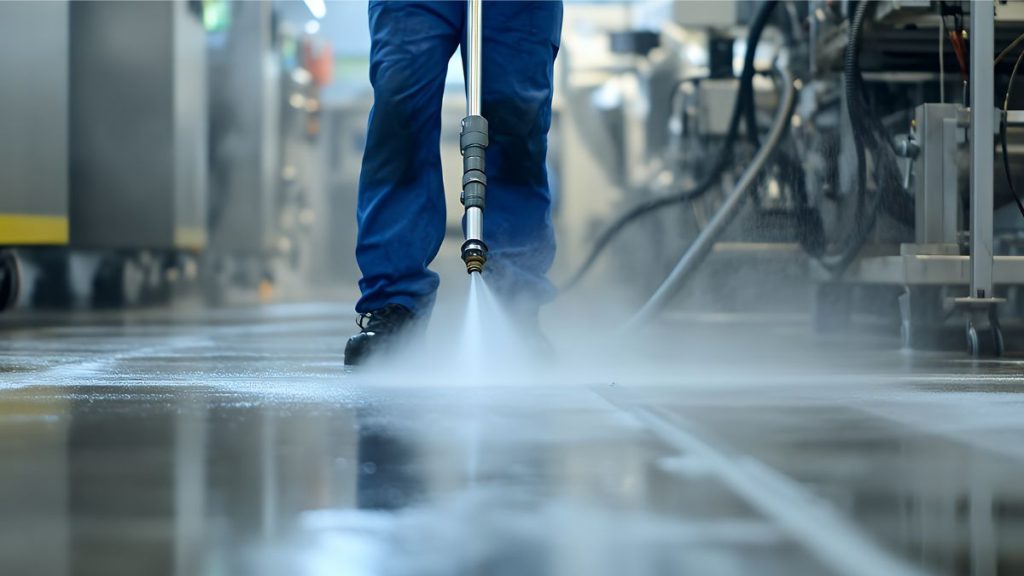
Manual cleaning involves disassembling equipment or cleaning surfaces by hand using brushes, hoses, detergents, and sanitizers. Operators perform each cleaning step manually according to standard operating procedures.
Advantages of Manual Cleaning
- Lower initial investment
- Suitable for simple equipment designs
- Flexible for hard-to-reach areas
- Appropriate for small-scale production
Limitations of Manual Cleaning
Despite its flexibility, manual cleaning has several challenges:
- Cleaning quality depends on operator’s skills
- Longer cleaning and production downtime
- Higher labor requirements
- Greater variability between cleaning cycles
- Increased risk of human error
As production volumes increase, these limitations often become more significant and costly.
Read Also: CIP Cleaning Chemicals: A Guide to Better Cleaning Performance
Overview of CIP
Clean-in-Place, or CIP, is an automated cleaning system designed to clean the internal surfaces of pipes, tanks, heat exchangers, and process equipment without dismantling them.
A CIP system typically performs a programmed sequence of:
- Pre-rinse
- Alkaline washing
- Intermediate rinsing
- Acid washing if necessary
- Final rinsing
- Sanitization
Because the entire process is automated, cleaning parameters such as temperature, flow rate, chemical concentration, and cleaning time remain consistent from cycle to cycle.
Advantages of CIP
- Faster cleaning cycles
- Reduced production downtime
- Consistent cleaning performance
- Lower labor requirements
- Optimized chemical usage
- Improved water efficiency
- Better traceability and documentation
These benefits make CIP an increasingly preferred solution for food and beverage manufacturers seeking higher operational efficiency.
CIP vs Manual Cleaning: Water, Labor, Chemicals, and Downtime
The main differences between CIP vs manual cleaning can be seen through four important operational factors.
1. Water Consumption
Manual cleaning often uses large amounts of water because operators rinse equipment based on visual inspection. Water usage can vary significantly between cleaning cycles.
CIP systems are designed with controlled flow rates and optimized rinse cycles, reducing unnecessary water consumption and improving sustainability.
2. Labor Requirements
Manual cleaning requires operators to disassemble equipment, clean surfaces individually, inspect cleanliness, and reassemble equipment afterward.
CIP automates these tasks, allowing operators to focus on monitoring and verification instead of performing repetitive cleaning activities.
3. Chemical Usage
Manual cleaning can lead to inconsistent chemical dosing. Using too much chemical increases costs, while using too little may compromise cleaning effectiveness.
CIP systems accurately control chemical concentration, temperature, and contact time, ensuring efficient cleaning with optimized chemical consumption.
4. Production Downtime
Manual cleaning often requires longer shutdown periods due to equipment disassembly and manual washing.
CIP significantly shortens cleaning time because the equipment remains assembled during the process. Faster cleaning means production can resume sooner.
Food Safety Comparison
Food safety is one of the most important considerations when comparing CIP vs manual cleaning.
Manual cleaning effectiveness depends heavily on operator consistency. Variations in cleaning methods, insufficient rinsing, or missed areas may create opportunities for microbial growth and cross-contamination.
CIP offers a more standardized approach. Every cleaning cycle follows predefined parameters, creating repeatable and validated cleaning performance.
For industries producing:
- Dairy products
- Beverages
- Sauces and condiments
- Ready-to-drink beverages
- Processed foods
- Liquid food ingredients
CIP provides a higher level of cleaning consistency that supports food safety management systems and regulatory compliance.
Read Also: Food Contamination Cost: Understanding the Risks and How to Prevent Expensive Losses
Which Method Is More Efficient?
The answer depends on the scale and complexity of your operation.
Manual cleaning may still be practical for:
- Small-scale production
- Simple equipment designs
- Facilities with infrequent cleaning requirements
However, for medium to large food and beverage manufacturers, CIP generally provides greater efficiency through:
- Lower water consumption
- Reduced labor costs
- Shorter downtime
- Consistent cleaning performance
- Better food safety assurance
- Improved process repeatability
From both operational and long-term cost perspectives, CIP is often the more efficient solution.
Choosing the Right Cleaning Strategy for Long-Term Efficiency
Rather than viewing cleaning as a routine expense, many manufacturers now see it as an opportunity to improve productivity and strengthen food safety standards.
An effective CIP system is not simply about automation. The system must be properly designed according to:
- Production capacity
- Equipment configuration
- Soil characteristics
- Chemical compatibility
- Cleaning validation requirements
- Water and energy efficiency targets
The right design ensures the cleaning process delivers maximum performance while controlling operating costs.
How LAI Supports Efficient Cleaning and Sanitation
At LAI, we understand that every food and beverage facility has unique cleaning challenges. That is why our approach focuses on providing integrated cleaning and sanitation solutions that align with your production requirements and operational goals.
Our team can support your facility through:
- CIP system design and optimization
- Cleaning and sanitation chemicals
- Water treatment solutions for CIP applications
- Process consultation and technical support
- System performance evaluation and improvement
By combining expertise in water treatment, cleaning chemistry, and industrial process applications, LAI helps manufacturers improve cleaning efficiency while maintaining high food safety standards.
Improve Cleaning Efficiency with the Right Solution
Whether you are evaluating your current cleaning process or planning to upgrade your facility, selecting the right cleaning strategy can significantly improve operational efficiency and food safety performance.
Contact LAI today to discuss your cleaning and sanitation requirements and discover how the right CIP solution can help optimize your production process while reducing costs and downtime.