In many industrial water treatment systems, chemical dosing problems often begin with one simple issue: the wrong dosage selection. Overdosing on chemicals can increase operational costs and create sludge problems, while underdosing can reduce water quality and treatment efficiency. This is why a proper jar test becomes one of the most important steps in optimizing water treatment performance.
A jar test helps operators determine the most effective chemical type and dosage before applying it directly to the full-scale system. Whether dealing with high turbidity raw water, fluctuating water quality, or unstable clarification performance, jar testing allows industries to make more accurate treatment decisions while reducing operational risks.
What Is a Jar Test?
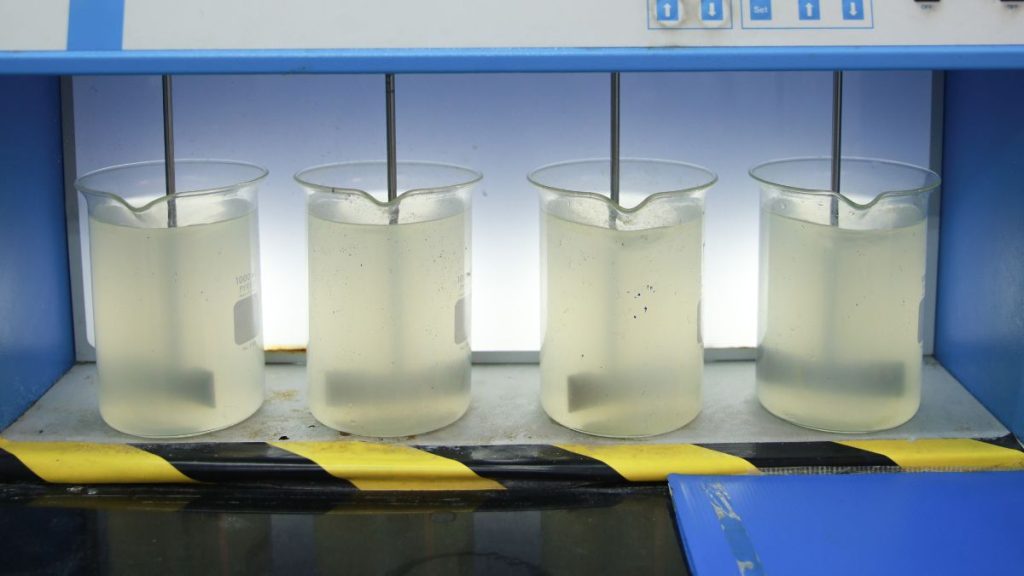
A jar test is a laboratory-scale simulation used in water treatment to evaluate how different chemicals react with water under controlled conditions. The test is commonly performed using multiple beakers filled with raw water samples, where varying doses of coagulants, flocculants, or pH adjustment chemicals are added and mixed.
The purpose of the test is to identify:
- The most suitable chemical for the application
- The optimal dosage level
- The ideal pH condition
- Floc formation performance
- Sedimentation characteristics
- Overall clarification efficiency
By observing the reaction inside each jar, operators can compare treatment performance and determine which condition delivers the best result before implementation in the actual system.
Read Also: How Online Monitoring Improves Water Treatment Performance
Why Is Jar Test Important in Water Treatment?
Water quality can change significantly depending on the source, season, weather conditions, and industrial activities. A dosing program that worked effectively last month may no longer provide the same result today. Without proper testing, operators often rely on estimation, which can lead to inefficient chemical usage and unstable treatment performance.
A jar test helps industries solve several operational challenges, including:
1. Optimizing Chemical Consumption
One of the biggest advantages of jar testing is reducing unnecessary chemical usage. By identifying the exact dosage needed, industries can avoid excessive dosing while still achieving target water quality.
This helps reduce:
- Chemical costs
- Sludge production
- Cleaning frequency
- Operational inefficiencies
2. Improving Clarification Performance
Poor coagulation and flocculation can cause high turbidity, carryover solids, and unstable downstream filtration performance. Jar testing helps operators evaluate floc formation quality and settling behavior before applying the treatment program.
This is especially important for:
- Clarifier systems
- Raw water treatment plants
- Wastewater treatment facilities
- Industrial process water systems
3. Supporting Rapid Operational Adjustments
Raw water conditions can fluctuate rapidly during heavy rainfall, seasonal changes, or production variations. Jar testing allows operators to quickly evaluate treatment adjustments without risking the full system operation.
Instead of trial-and-error dosing directly in the plant, operators can validate treatment strategies safely through laboratory testing.
4. Selecting the Right Chemical Combination
Different water characteristics may require different treatment chemicals. Some systems perform better with Poly Aluminium Chloride (PAC), while others may require aluminum sulfate, ACH, or specific flocculants.
Jar testing helps determine:
- Which coagulant performs best
- Whether flocculants are necessary
- Suitable pH correction strategies
- Compatibility between chemicals
This allows industries to build a more stable and efficient treatment program.
When Should You Use Jar Testing?
Many industries only perform jar testing during initial commissioning, but in reality, jar tests should be conducted regularly whenever water conditions or operational performance change.
Jar testing is highly recommended when:
1. Raw Water Quality Changes
Sudden increases in turbidity, color, organic content, or suspended solids can affect treatment performance significantly.
2. Chemical Consumption Increases
If chemical usage continues rising without improvement in water quality, jar testing can help identify more efficient dosing conditions.
Read Also: How Preventive Maintenance Helps Reduce Chemical Consumption in Water Treatment
3. Clarifier Performance Declines
Poor settling, floating sludge, or carryover solids often indicate that the current treatment program requires adjustment.
4. New Water Sources Are Introduced
Different water sources have different characteristics. Jar testing helps determine the appropriate treatment approach before full implementation.
5. Operational Troubleshooting Is Needed
Jar testing is commonly used to investigate:
- High turbidity problems
- Unstable pH conditions
- Slow floc formation
- Excess sludge production
- Poor sedimentation performance
How Jar Testing Supports More Reliable Water Treatment
A well-performed jar test does more than simply determine chemical dosage. It helps industries improve overall system reliability by minimizing operational uncertainty
Benefits of regular jar testing include:
- More stable treated water quality
- Better filtration performance
- Reduced membrane fouling risk
- Lower sludge handling costs
- Improved operational consistency
- Faster response to water quality fluctuations
For industries operating boilers, cooling towers, RO systems, or wastewater treatment plants, maintaining stable upstream treatment performance is critical for protecting downstream equipment and maintaining efficiency.
Supporting More Effective Water Treatment Optimization
Effective jar testing requires more than laboratory equipment. It also requires experience in interpreting water characteristics, selecting suitable chemicals, and translating laboratory results into real operational improvements.
As a company with decades of experience in industrial water treatment, Lautan Air Indonesia provides comprehensive support for industries that need more reliable and efficient water treatment performance.
LAI supports customers through:
- Water quality analysis
- Jar testing evaluation
- Chemical selection recommendations
- Coagulant and flocculant optimization
- Troubleshooting support
- Operational consultation
- Customized water treatment programs
With extensive experience across multiple industries, LAI helps customers improve treatment stability while optimizing operational efficiency and chemical consumption.
Want to improve your water treatment efficiency and reduce unnecessary chemical costs? Contact Lautan Air Indonesia to discuss your industrial water treatment challenges and optimization needs.