
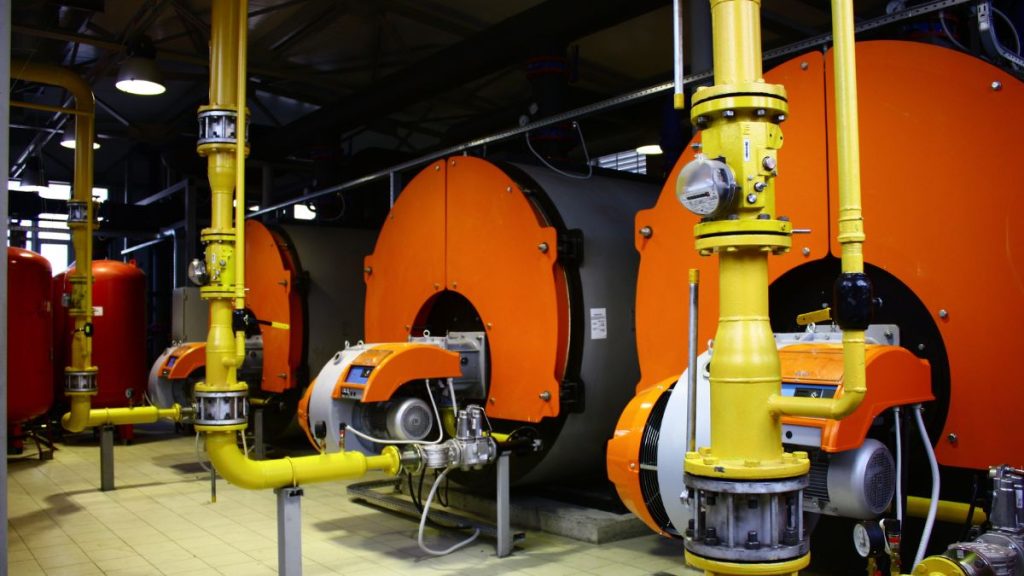
Deaeration in boilers is one of the most critical processes in maintaining system efficiency and preventing long-term damage. Without proper deaeration, dissolved gases like oxygen and carbon dioxide remain in the feedwater, leading to corrosion, reduced heat transfer, and costly equipment failure. In many industrial operations, these problems do not appear instantly, but once they develop, they are expensive and difficult to reverse.
This is why understanding how deaeration works, choosing the right system, and knowing how to handle common issues are essential for stable and efficient boiler operation.
The Purpose of Deaeration in Boilers
The main purpose of deaeration in boilers is to remove dissolved gases, especially oxygen and carbon dioxide, from boiler feedwater before it enters the system.
Oxygen is highly reactive and can cause pitting corrosion even at very low concentrations. Meanwhile, carbon dioxide dissolves in water and forms carbonic acid, which lowers pH and accelerates corrosion in condensate return lines. If these gases are not removed properly, they will continuously attack metal surfaces and reduce the lifespan of the equipment.
By applying effective deaeration, industries can:
- Prevent internal corrosion in boilers and piping systems
- Maintain better heat transfer efficiency
- Reduce chemical consumption
- Extend equipment lifetime
- Ensure more stable and reliable operation
In practice, deaeration is not just a protective step, but a key factor in keeping operational costs under control.
Types of Deaerators Used in Boiler Systems
To achieve effective deaeration in boilers, the system design must match operational needs. The two most commonly used types are tray type and spray type deaerators.
1. Tray Type Deaerator
Tray type deaerators use multiple perforated trays to create maximum contact between steam and water. Feedwater flows downward through these trays, while steam rises upward, heating the water to its saturation temperature and releasing dissolved gases.
This type is widely used in medium to large scale boiler systems because it offers stable performance and high efficiency, especially under varying load conditions. To maintain its effectiveness, the trays must be kept clean and free from fouling, as deposits can reduce contact efficiency.
2. Spray Type Deaerator
Spray type deaerators work by dispersing water into fine droplets using spray nozzles. This increases the surface area, allowing faster heating and gas removal when the droplets come into contact with steam.
This system is more compact and suitable for smaller applications or installations with space limitations. However, its performance depends heavily on nozzle condition, so regular inspection is important to ensure even spray distribution and consistent deaeration.
Read Also: The Importance of Condensate Treatment for Reliable Boiler Operations
Common Issues in Deaeration in Boilers
In daily operation, issues in deaeration in boilers usually appear as small irregularities, but if ignored, they can quickly affect the entire boiler system. Understanding what causes these problems and how to respond is key to maintaining stable performance.
1. Oxygen Still Found in Feedwater
One of the most common issues is when oxygen is still detected in the feedwater even after the deaeration process. This usually happens because the feedwater does not reach the required saturation temperature, the steam supply is not consistent, or the venting system is not releasing gases properly.
To resolve this, operators need to ensure that the deaerator operates at the correct temperature, supported by a stable steam supply, and that the vent is adjusted properly to allow non condensable gases to escape without restriction.
2. Corrosion Still Occurs
If corrosion continues to appear in boiler tubes or condensate lines, it is a strong indication that deaeration is not fully effective. This condition often occurs when residual oxygen remains in the system and is not supported by proper chemical treatment.
The solution is to improve the overall deaeration performance while also applying an appropriate oxygen scavenger program, so that any remaining dissolved oxygen can be safely removed before it causes damage.
3. Steam Loss from Vent is Too High
Excessive steam coming out from the deaerator vent is another issue that is often overlooked. This usually happens because the vent opening is too large, causing unnecessary steam loss without improving gas removal efficiency.
To handle this, the vent should be adjusted carefully to achieve a balance, where gases can still be released effectively while minimizing energy loss from excessive steam discharge.
Read Also: Boiler Water Treatment: Why It’s Important and Key Steps to Process It
4. Deaerator Temperature is Unstable
An unstable deaerator temperature can directly reduce the effectiveness of gas removal. This problem is commonly caused by fluctuating steam pressure or an inconsistent control system that cannot maintain steady operating conditions.
To fix this, it is important to stabilize the steam supply and ensure that control valves and instrumentation are working properly, so the deaerator can consistently reach and maintain the required temperature.
5. Deaerator Gets Dirty Quickly
When trays or spray nozzles become dirty or clogged frequently, the root cause is usually poor water quality entering the system. Suspended solids or hardness that are not properly treated upstream will accumulate inside the deaerator and reduce its efficiency.
The best way to address this is by improving the upstream water treatment process, such as filtration or softening, and maintaining a regular cleaning schedule to keep the deaerator in optimal condition.
Optimizing Deaeration in Boilers with the Right Support
Deaeration in boilers is not only about equipment, but also about how well the system is operated and supported. Mechanical performance, chemical treatment, and operational control must work together to achieve consistent results.
In many cases, recurring issues like corrosion, unstable temperature, or high oxygen levels are not caused by a single factor, but by a combination of system gaps that require a more integrated approach.
PT Lautan Air Indonesia supports industries by identifying these gaps through detailed system evaluation, followed by tailored solutions that include chemical treatment programs, performance monitoring, and operational assistance. With the right approach, deaeration can run more efficiently, reduce the risk of damage, and help maintain long-term boiler reliability.
If your boiler system is still experiencing oxygen issues, corrosion, or unstable performance, it may be time to reassess how your deaeration system is operating. Working with the right partner can help ensure the problem is not only fixed, but prevented from coming back.
Contact Lautan Air Indonesia team to discuss your boiler problem.