
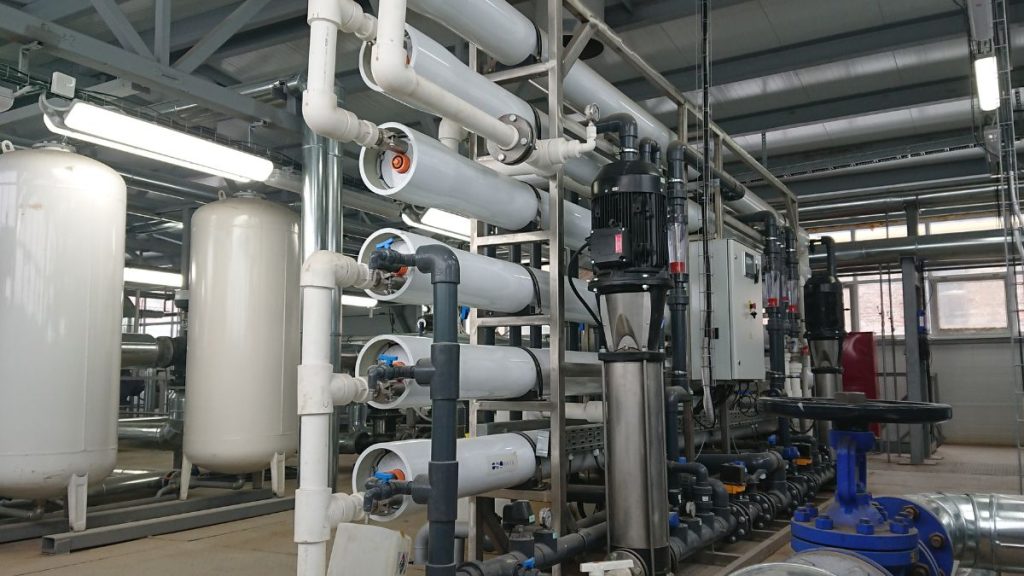
Water treatment for food and beverage is a critical solution to ensure consistent product quality, operational efficiency, and regulatory compliance. In an industry where water is directly involved in production, even small variations in water quality can lead to significant issues—from product inconsistency to equipment failure.
Instead of treating water as a basic utility, leading manufacturers approach it as a controlled and managed component of the production process.
Importance of Water Treatment in the Food and Beverage Industry
The role of water in food and beverage production goes beyond hydration or cleaning. It directly influences product integrity, safety, and process reliability.
Without proper treatment, water can introduce:
- Microorganisms that compromise food safety
- Dissolved minerals that alter taste and texture
- Suspended solids that affect clarity and appearance
- Scaling and fouling that reduce equipment efficiency
In daily operations, these issues often appear as inconsistent product quality, increased maintenance frequency, and unexpected downtime.
By implementing proper water treatment, manufacturers can stabilize water quality parameters such as turbidity, hardness, total dissolved solids (TDS), and microbial content. This consistency is essential to maintaining both production standards and consumer trust.
Water Treatment Applications in the Food and Beverage Industry
Water treatment is applied across multiple operational points, each requiring different levels of quality and control.
1. Ingredient and Product Water
Water used as a direct ingredient must meet strict quality standards. Any variation can impact flavor, color, and shelf life.
2. Process Water
Used in mixing, heating, and cooling processes, water must remain consistent to ensure stable production outcomes.
3. Cleaning and Sanitation Systems
In CIP (Clean-in-Place) systems, water quality affects cleaning effectiveness. Hardness and contaminants can reduce chemical performance and leave residues.
4. Utility Systems (Boiler and Cooling)
- Boiler systems require low hardness and minimal dissolved solids to prevent scaling
- Cooling systems need proper treatment to avoid corrosion and biological growth
5. Wastewater Management
Effluent treatment is necessary to comply with environmental regulations and support sustainability initiatives.
Each application requires a specific treatment approach, making system design a critical factor in overall performance.
Technology Used in Water Treatment for Food and Beverage
Effective water treatment for food and beverage typically involves a combination of technologies working together as an integrated system.
Pre-Treatment:
- Clarification to remove suspended solids
- Media filtration using silica sand, anthracite, or activated carbon
Membrane Filtration:
- Ultrafiltration (UF) to remove fine particles and microorganisms
- Reverse Osmosis (RO) to reduce dissolved salts and organic contaminants
Ion Exchange:
- Used for softening and demineralization, especially in boiler and process applications.
Disinfection:
- Chlorination for residual protection
- UV systems for microbial control
- Ozone for high-level disinfection without chemical residues
The effectiveness of these technologies depends not only on selection, but also on how well they are integrated and operated.
Read Also: ACH Water Treatment: What It Is and Why It’s Effective for Water Clarification
Benefits of Proper Water Treatment
A well-designed water treatment for food and beverage system provides several key operational advantages:
Consistent Product Quality
Stable water quality ensures uniform taste, texture, color, and overall product integrity across every batch. By controlling parameters such as TDS, hardness, and microbial content, manufacturers can minimize variations and maintain brand consistency, which is especially critical for large-scale production.
Improved Operational Efficiency
Proper water treatment reduces issues such as scaling, fouling, and biofilm formation in pipelines and equipment. This leads to smoother operations, fewer process disruptions, and more predictable production cycles. As a result, production teams can focus on output rather than troubleshooting recurring water-related problems.
Lower Maintenance Costs
When contaminants are effectively removed, equipment such as boilers, heat exchangers, membranes, and piping systems experiences less stress and damage. This reduces the frequency of cleaning, chemical usage, and part replacements, ultimately lowering overall maintenance costs and extending asset lifespan.
Enhanced Food Safety and Regulatory Compliance
Water that meets required standards helps ensure compliance with food safety regulations and industry guidelines. Proper treatment reduces the risk of microbial contamination and chemical imbalance, supporting audit readiness and minimizing the risk of product recalls or non-compliance penalties.
Resource Optimization and Sustainability
Efficient water treatment systems enable better water management, including reduced consumption, recycling, and reuse of treated water for non-critical applications. This not only lowers water costs but also supports sustainability goals and environmental compliance.
Supporting Reliable Water Treatment in Food and Beverage Operations
Implementing water treatment for food and beverage goes beyond selecting the right technology. It requires proper system design, integration, and consistent operation to ensure reliable performance over time.
Each facility faces unique challenges, from fluctuating raw water quality to strict product standards and cost efficiency targets. Addressing these requires a practical and well-rounded approach to water treatment.
With extensive experience in industrial water treatment, Lautan Air Indonesia supports food and beverage manufacturers through tailored system design, treatment chemicals, and operational expertise. The focus is on maintaining stable water quality across all stages, from ingredient water to cleaning and utility systems.
By aligning the treatment approach with specific operational needs, manufacturers can improve consistency, reduce risks, and support long-term efficiency.
Read Also: Ensure Water Quality with the Right Water Treatment Chemical
Explore the Right Approach for Your Facility
Every process has different water quality requirements. Understanding these needs is the first step toward building a reliable system.
If you are evaluating or improving your current setup, exploring the right approach with an experienced partner can help you achieve more consistent and efficient results.
Contact us to learn more about how Lautan Air Indonesia supports water treatment for food and beverage applications.