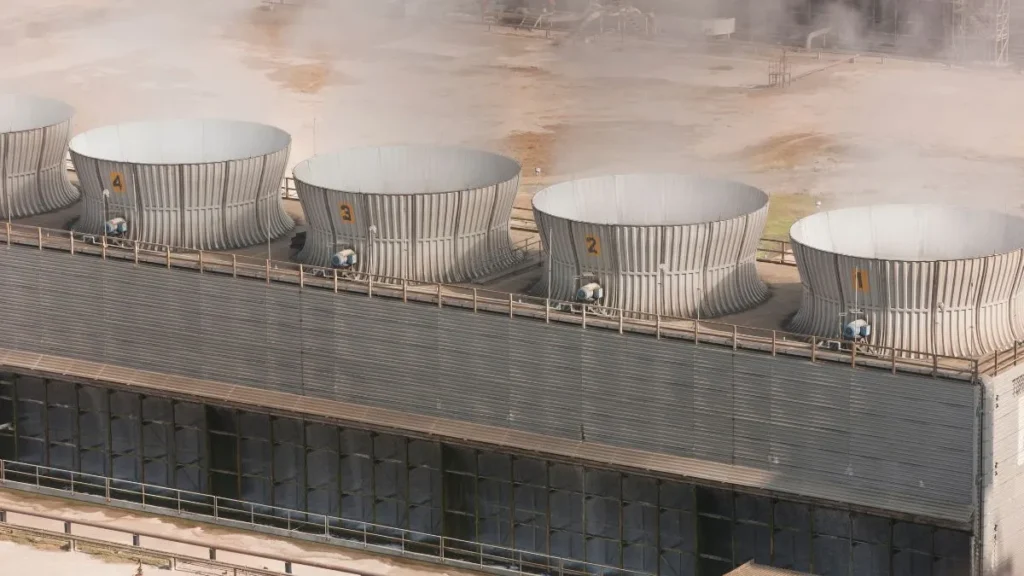
Scale buildup is one of the most common and costly problems in water treatment systems. Without proper control, mineral deposits will form inside cooling towers, boilers, heat exchangers, and RO units. These deposits reduce heat transfer efficiency, increase energy usage, shorten equipment lifespan, and force frequent shutdowns.
The right scale inhibitor helps prevent these issues by stopping scale formation before it starts. This article explains how scale inhibitors work and how to select the right one for your system.
Why Scale Inhibitors Are Essential in Industrial Water Systems
Many operational issues occur because untreated minerals such as calcium, magnesium, silica, and sulfate naturally crystallize and form hard deposits. When this happens, systems experience:
- Reduced heat transfer
- Higher blowdown and water consumption
- Increased chemical cost
- Faster equipment deterioration
- Unexpected downtime
A proper scale inhibitor program allows the system to run at higher cycles of concentration, reducing water use while maintaining stable performance.
What Is a Scale Inhibitor
A scale inhibitor is a chemical designed to prevent the formation of mineral scale inside water circulation systems. It works by interrupting the crystallization process of hardness salts so that the minerals remain dissolved or dispersed. This keeps the system clean, efficient, and protected from potential damage.
Scale inhibitors are commonly used in:
- Cooling towers
- Boilers
- Heat exchangers
- Reverse osmosis (RO) pretreatment
- Chilled water systems
They help prevent scale from minerals such as calcium carbonate, calcium sulfate, barium sulfate, silica, silicates, and magnesium hydroxide.
Read Also: Antiscalant: Anti-Scaling Solution for Reverse Osmosis
Types of Scale Inhibitors for Industrial Applications
Here are some types of scale inhibitors that are commonly used in water treatment:
1. Phosphonates
Phosphonates are widely used because they can bind calcium and magnesium effectively. They work across broad pH and temperature ranges and have dispersant capability that helps prevent small particles from forming deposits.
2. Organic Polymers
Organic polymers act as both scale inhibitors and dispersants. They interfere with crystal growth and keep particles suspended so they do not settle. They perform well in systems with high metal content and fluctuating water quality.
3. Phosphates and Polyphosphates
Although older in formulation, they are still used in certain systems. They work by forming complex compounds with scaling ions. Modern operations often prefer phosphonates or polymers due to better stability.
4. Organic Acid Based Inhibitors
These environmentally friendly options, often based on citric or gluconic acid, are suitable for light scaling conditions or as complementary additives.
Selecting the right scale inhibitor requires water analysis, which includes hardness, alkalinity, pH, temperature, and TDS. Every system has different challenges, so the formulation must match operational conditions.
Read Also: Scaling and Corrosion in Boilers: A Hidden Threat to Face
How a Scale Inhibitor Works
Scale inhibitors prevent deposits through three main mechanisms:
1. Threshold Inhibition
The inhibitor binds with minerals at very low concentrations, delaying the formation of crystal nuclei.
2. Crystal Distortion
The inhibitor attaches to growing crystals and disrupts their structure. This produces unstable crystals that cannot adhere to surfaces.
3. Dispersing Action
The inhibitor keeps particles suspended, preventing them from settling or forming deposits inside the system.
Through these mechanisms, the scale inhibitor keeps the system free from scale, reduces maintenance, and extends equipment life.
Industrial Solutions for Scale Free Systems
With over forty years of experience, Lautan Air Indonesia provides complete solutions to ensure scale control works effectively and consistently. Our approach includes:
- Full water analysis to determine the right formulation
- Selection of the most suitable scale inhibitor and dosage
- On site technical support and routine monitoring
- Operation and Maintenance services for long term system reliability
- Integration with digital control and IOT for real time performance tracking
This combination of high quality chemicals and expert technical service helps industries maintain efficient, reliable, and cost effective water systems.
Start Preventing Scale with the Right Solution
If your cooling tower, boiler, or heat exchanger shows early signs of scale or reduced efficiency, it is time to optimize your scale inhibitor program. Contact the Lautan Air Indonesia team today for consultation, system evaluation, or a complete water treatment solution tailored to your operational needs.