In the modern era of digital transformation, online monitoring has become an essential component in optimizing industrial operations, especially in water treatment systems. By integrating sensors, automation, and IoT (Internet of Things), industries can continuously track water quality, anticipate system inefficiencies, and improve overall plant performance in real time.
For companies that rely on consistent water quality, such as those in food processing, manufacturing, and energy production, online monitoring ensures reliability, efficiency, and compliance with environmental standards.
Understanding Online Monitoring in Water Treatment
Online monitoring refers to the real-time observation and analysis of various parameters within a water treatment process. Instead of relying solely on manual sampling or periodic testing, online monitoring systems use digital sensors and smart control devices to measure critical factors such as pH, turbidity, conductivity, Total Dissolved Solids (TDS), temperature, and flow rate.
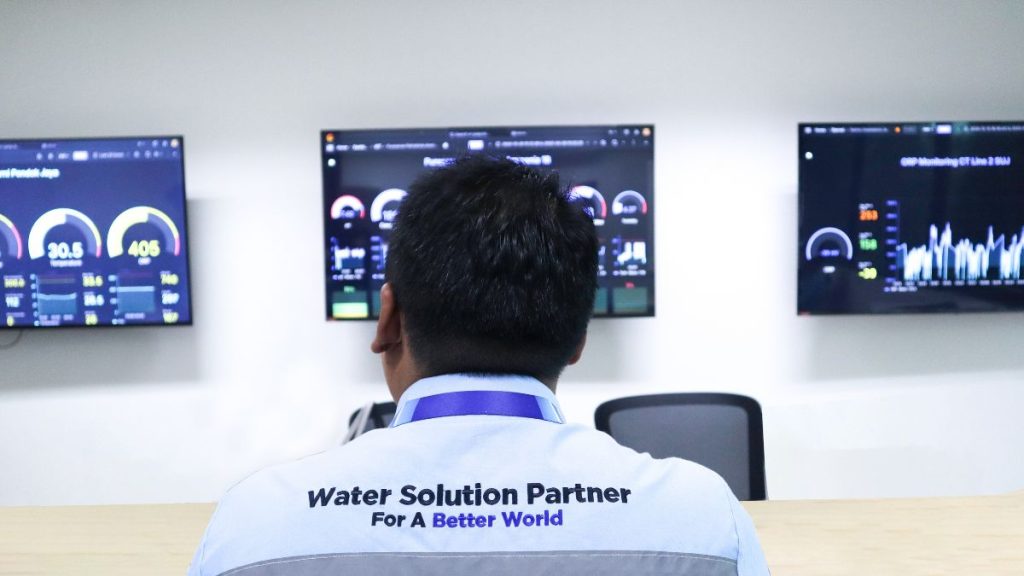
This data is transmitted to a centralized control system, often integrated with cloud-based dashboards. Plant operators can visualize trends, receive instant alerts, and make informed decisions without delays. The result is proactive management that prevents problems before they escalate and ensures consistent water quality output.
The Role of Sensors in Smart Water Treatment
At the core of any online monitoring system are sensors. These devices continuously collect accurate and real-time data from different stages of the water treatment process. Depending on the type of water being treated, such as raw water, process water, or wastewater, different sensors are used to measure various quality parameters.
For example:
- pH Sensors help monitor the acidity or alkalinity of water, ensuring the right conditions for coagulation or biological treatment.
- Turbidity Sensors detect suspended solids that affect water clarity and filtration performance.
- Conductivity Sensors measure ionic concentration, indicating levels of dissolved salts and minerals.
When these sensors are connected through online monitoring systems, the data they produce becomes a powerful foundation for optimization. Instead of reacting to water quality problems, operators can prevent them through early detection and automated responses.
Read Also: The Role of pH Controller in Boiler Systems
Automation for Continuous Optimization
Automation plays a key role in turning online monitoring data into actionable control. With the right automation setup, changes in water quality can trigger instant responses such as adjusting chemical dosing, modifying flow rates, or activating backup systems.
This not only minimizes manual intervention but also reduces the risk of human error. In addition, automation improves resource efficiency by ensuring chemicals and energy are used optimally. For instance, if turbidity levels rise, an automated system can increase coagulant dosing precisely to restore clarity without overdosing.
In water treatment facilities where reliability and consistency are critical, automation powered by online monitoring creates a closed-loop system that continuously senses, analyzes, and adjusts for the best performance.
Read Also: Common Dosing Pump Issues in Water Treatment Systems and How to Troubleshoot Them
IoT Integration: Connecting Every Drop
The Internet of Things (IoT) connects sensors, controllers, and data analytics platforms through a unified digital ecosystem. When applied in water treatment, IoT enables remote access, predictive maintenance, and data-driven optimization.
Through IoT-based online monitoring, operators can oversee multiple treatment plants from a single dashboard, regardless of their location, whether in different cities or elsewhere. Real-time data transmission ensures immediate visibility of performance issues, equipment health, and water quality indicators.
Innovating Water Treatment Through Smart Monitoring Systems
As a leading water treatment solutions provider with over four decades of experience, Lautan Air Indonesia (LAI) integrates online monitoring, automation, and IoT technologies into its smart control systems.
LAI’s smart water treatment solutions are designed to help industries:
- Monitor key parameters in real time (pH, turbidity, conductivity, TDS, flow rate, temperature, etc.)
- Automate operational control based on live data input
- Optimize chemical usage through intelligent dosing control
- Predict and prevent failures with remote diagnostics and data analytics
- Enhance operational transparency through digital dashboards and reporting
Whether for raw water treatment, boiler and cooling systems, or wastewater management, LAI provides tailored online monitoring systems that meet industry-specific standards and performance goals.
Through the combination of smart sensors, automated control panels, and IoT-enabled communication, LAI empowers customers to achieve maximum efficiency and reliability in their water treatment operations.
Benefits of Implementing Online Monitoring
The impact of online monitoring goes beyond just operational visibility. It drives measurable improvements across several key areas:
1. Improved Water Quality Control
Continuous data ensures that water quality remains within desired specifications, minimizing risks of non-compliance or production issues.
2. Cost Efficiency
With automated control and data-based decisions, plants use fewer chemicals and energy, resulting in lower operating costs.
3. Reduced Downtime
Early detection of issues such as membrane fouling, sensor drift, or pump failure prevents costly unplanned shutdowns.
4. Regulatory Compliance
Real-time data logging provides accurate and traceable records for environmental reporting and compliance audits.
With decades of expertise and a commitment to innovation, Lautan Air Indonesia helps industries build smarter, more efficient water treatment systems through advanced online monitoring and smart control technologies.
Enhance your plant’s performance with smart online monitoring from Lautan Air Indonesia. Contact our team today to learn how we can help you design a fully integrated system tailored to your operational needs.