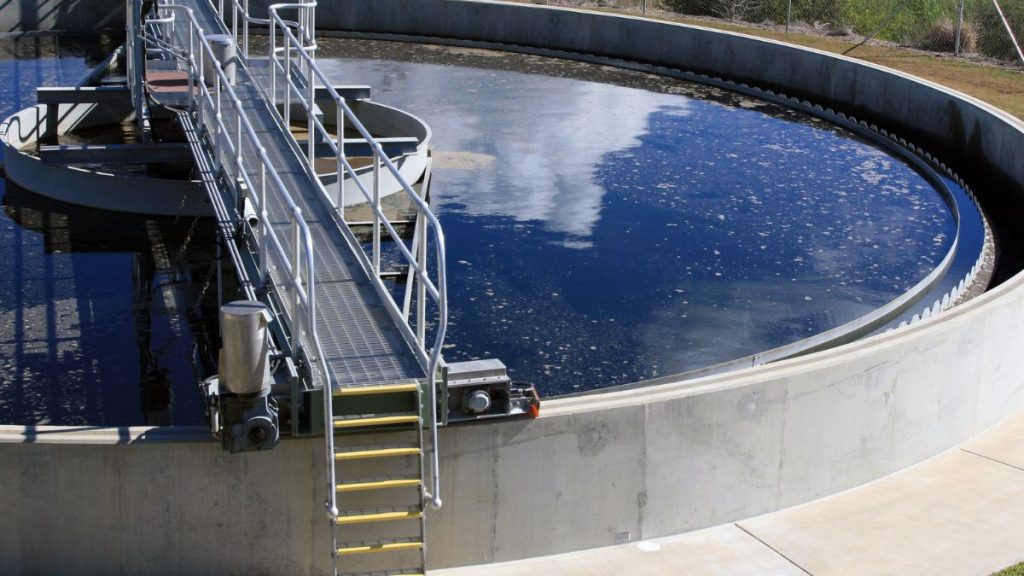
Water treatment plants often face a common challenge: removing suspended solids, turbidity, and organic contaminants efficiently without increasing operational complexity. One of the most reliable solutions widely used today is ACH water treatment, which utilizes Aluminum Chlorohydrate (ACH) as a high-performance coagulant.
Compared with conventional coagulants, ACH provides stronger coagulation performance, lower sludge production, and more stable operation across different raw water conditions. Because of these advantages, ACH is increasingly applied in municipal water treatment plants, industrial water systems, and wastewater treatment processes.
What is ACH?
Aluminum Chlorohydrate (ACH) is a high-basicity aluminum-based coagulant commonly used in water treatment processes. It belongs to the family of pre-polymerized aluminum coagulants, meaning that part of the hydrolysis process has already occurred during manufacturing.
Because of this structure, ACH contains a higher concentration of polymerized aluminum species, which are highly effective at destabilizing suspended particles in water.
From an operational perspective, ACH offers several advantages compared to traditional coagulants such as aluminum sulfate or basic aluminum chloride:
- Higher aluminum content allows lower dosing requirements
- Faster coagulation reaction, improving treatment efficiency
- Lower sludge production, reducing disposal costs
- Wider effective pH range, making it suitable for varying raw water conditions
These characteristics make ACH a preferred coagulant in many modern water treatment systems, particularly where consistent water quality and operational efficiency are priorities.
Read Also: Inorganic Coagulants for Better Water Treatment
The Role of ACH in Water Treatment
In practical water treatment operations, the primary role of ACH is to act as a coagulant that removes suspended particles, turbidity, and natural organic matter from raw water.
The ACH water treatment process generally occurs in the coagulation and flocculation stages.
1. Destabilizing Suspended Particles
Raw water typically contains fine particles, colloids, and organic matter that remain suspended because they carry negative surface charges. These charges prevent the particles from naturally settling.
When ACH is added to the water:
- The positively charged aluminum polymers neutralize the particle charges
- This destabilizes the suspended particles
- Particles begin to collide and attach to each other
This step is known as coagulation, and it forms the foundation of effective solid removal.
2. Forming Larger Flocs for Easier Removal
After charge neutralization, the destabilized particles begin to aggregate into larger clusters called flocs.
These flocs are significantly larger and heavier than individual particles, allowing them to be removed through processes such as:
- Clarification or sedimentation
- Dissolved air flotation (DAF)
- Filtration systems
ACH is particularly effective in forming dense and strong flocs, which improve separation efficiency and reduce the load on downstream filtration units.
3. Improving Turbidity and Organic Removal
Another important role of ACH water treatment is reducing turbidity and natural organic matter (NOM) in raw water.
High turbidity can interfere with disinfection processes and reduce overall water quality. By efficiently removing suspended particles and organic compounds, ACH helps achieve:
- Clearer water after clarification
- Improved filtration performance
- More effective disinfection downstream
This is especially important for drinking water treatment plants, where consistent turbidity control is required to meet regulatory standards.
Read Also: What are the Impacts of High TSS and Turbidity in Raw Water?
4. Supporting Stable Plant Operation
One of the key operational benefits of ACH is process stability.
Because ACH has high basicity, it causes less pH depression compared with traditional coagulants like alum. This means:
- Less need for pH adjustment chemicals
- More stable treatment conditions
- Lower chemical consumption overall
For plant operators, this translates to simpler process control and more predictable performance, particularly when raw water quality fluctuates.
When is ACH Commonly Used in Water Treatment?
ACH water treatment is widely applied in several water treatment scenarios, including:
Municipal Drinking Water Treatment
- Turbidity removal
- Organic matter reduction
- Surface water clarification
Industrial Water Treatment
- Process water clarification
- Pretreatment before filtration or membrane systems
Wastewater Treatment
- Suspended solids removal
- Improved sludge settling performance
Because of its high efficiency and operational reliability, ACH is often selected when treatment plants require consistent performance with optimized chemical usage.
Read Also: Improve the Water Treatment Plant Efficiency for Sustainable and Cost-Effective Operations
Improve Your Water Treatment Performance with ACH
Selecting the right coagulant is essential to achieving stable and efficient water treatment results. While ACH water treatment offers strong advantages in coagulation efficiency and sludge reduction, the optimal performance depends on proper chemical selection, dosage control, and system integration.
With more than 40 years of experience in water treatment solutions, Lautan Air Indonesia provides high-quality Aluminum Chlorohydrate (ACH) along with technical support to help industries and water treatment plants optimize their coagulation processes.
Our team can assist with:
- Raw water quality evaluation
- Jar testing and coagulant optimization
- Chemical selection and dosage recommendations
- Integrated water treatment solutions
If you are looking to improve coagulation efficiency or reduce operational costs in your treatment system, our specialists are ready to help.
Contact Lautan Air Indonesia today to discuss the right ACH water treatment solution for your facility.