
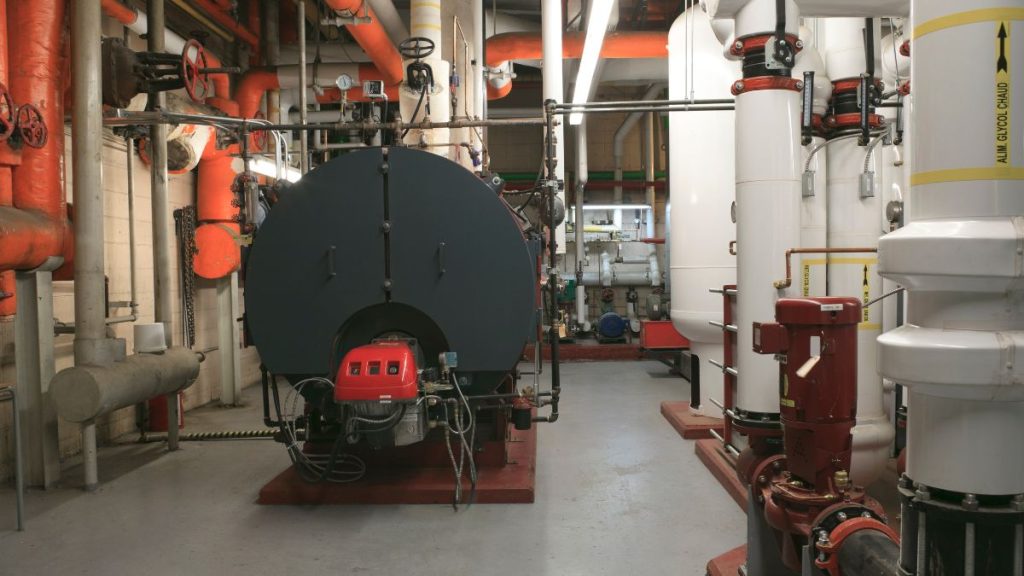
Boiler corrosion is not a problem you fix after it appears. It is a problem you prevent from the start. Without a clear corrosion prevention boiler strategy, even a well-designed system can quickly experience efficiency loss, unplanned downtime, and rising operational costs.
In many industrial operations, corrosion develops gradually and often goes unnoticed until it becomes a serious issue. This article explains the effects of corrosion in boilers, outlines practical ways to prevent it, and highlights how the right support can help maintain long-term performance.
Why Corrosion Prevention in Boilers Must Come First
Corrosion in boiler systems is mainly driven by dissolved oxygen, carbon dioxide, and improper water chemistry. When these elements are not properly controlled, they react with metal surfaces and initiate degradation processes such as oxidation and acid attack.
One of the biggest challenges is that corrosion does not always show immediate signs. Internally, metal surfaces may already be thinning or developing pits, while externally the system appears to operate normally. This makes prevention far more effective and economical than corrective action.
A well-implemented corrosion prevention boiler program ensures that water quality, chemical dosing, and system operation are consistently maintained within safe limits.
Effect of Corrosion in Boiler Systems
Understanding the real impact of corrosion helps operators recognize why prevention is essential for both performance and safety.
1. Reduced Heat Transfer Efficiency
Corrosion creates rough surfaces inside boiler tubes, often combined with deposits and scale. These irregularities act as barriers to heat transfer, forcing the boiler to use more fuel to achieve the same level of steam production. Over time, this leads to significant energy inefficiency.
Read Also: Deaeration in Boilers: Purpose, Types, and Common Issues
2. Equipment Damage and Failure
As corrosion progresses, it causes thinning of metal surfaces and localized pitting. These weak points can eventually lead to tube leaks or sudden failures. In high-pressure systems, even a small failure can escalate into major operational disruption.
3. Increased Operational Costs
Corrosion directly impacts maintenance budgets. Frequent repairs, chemical cleaning, and replacement of damaged components increase operational expenses. In addition, unplanned shutdowns can result in production losses that are far more costly than preventive measures.
4. Safety Risks
Boilers operate under high temperature and pressure conditions. Corrosion weakens structural integrity, increasing the risk of rupture or steam leaks. These incidents pose serious safety hazards to personnel and surrounding equipment.
5. Shortened Equipment Lifespan
Without proper corrosion control, the lifespan of boiler systems is significantly reduced. Instead of achieving long-term performance, companies may face early replacement of expensive equipment.
How to Prevent Corrosion in Boilers
An effective corrosion prevention boiler strategy focuses on controlling the root causes while maintaining stable operating conditions.
1. Remove Dissolved Oxygen
Oxygen is one of the primary contributors to corrosion. Mechanical deaeration systems are designed to remove dissolved gases from feedwater before it enters the boiler. Proper operation of the deaerator is essential to minimize oxygen content.
2. Apply Oxygen Scavengers
Even after deaeration, trace oxygen can remain in the system. Oxygen scavenger chemicals react with residual oxygen and prevent it from attacking metal surfaces. Consistent dosing is important to ensure complete protection.
Read Also: Protecting Boilers by Removing Oxygen from Feed Water
3. Maintain Proper pH Levels
Maintaining the correct pH range is critical to avoid both acidic and caustic corrosion. Low pH conditions can accelerate metal dissolution, while excessively high pH can damage protective layers. Regular testing and adjustment are necessary to keep the system balanced.
4. Control Carbon Dioxide in Condensate
Carbon dioxide dissolves in condensate and forms carbonic acid, which can corrode piping in the return system. The use of neutralizing amines helps maintain a stable pH in condensate lines and protects the system from acid attack.
5. Implement Regular Blowdown
Blowdown is essential to remove dissolved solids and impurities that accumulate in the boiler. Without proper blowdown, contaminants can concentrate and contribute to both scaling and corrosion.
6. Monitor Water Quality Continuously
Effective corrosion prevention relies on consistent monitoring. Key parameters such as dissolved oxygen, pH, conductivity, and chemical residuals must be checked regularly. Automated monitoring systems can help maintain stable conditions and reduce human error.
7. Ensure Proper System Operation
Operational factors such as temperature control, pressure stability, and consistent feedwater supply also influence corrosion risk. A well-maintained system with stable operation reduces fluctuations that can trigger corrosion processes.
Integrated Solutions for Boiler Corrosion Control
Preventing corrosion is not only about selecting the right chemicals. It requires a comprehensive approach that combines chemistry, system design, and operational control. This is where Lautan Air Indonesia can provide valuable support.
With extensive experience in industrial water treatment, LAI offers solutions that are designed to match real operating conditions.
Tailored Chemical Programs
LAI provides customized treatment programs that address oxygen control, pH balance, and scaling risks based on your specific boiler system.
System Evaluation and Improvement
Through detailed assessment, LAI helps identify hidden corrosion risks and recommends practical improvements to enhance system performance.
Monitoring and Control Support
LAI supports the implementation of reliable monitoring practices, helping ensure that key parameters remain within optimal ranges at all times.
Operation and Maintenance Assistance
Ongoing technical support helps maintain consistent performance, reduce downtime, and extend the life of boiler equipment.
The focus is not only on solving current issues but also on building a stable and sustainable corrosion prevention strategy.
Want to strengthen your corrosion prevention strategy? Get in touch with Lautan Air Indonesia to explore practical solutions tailored to your boiler system.